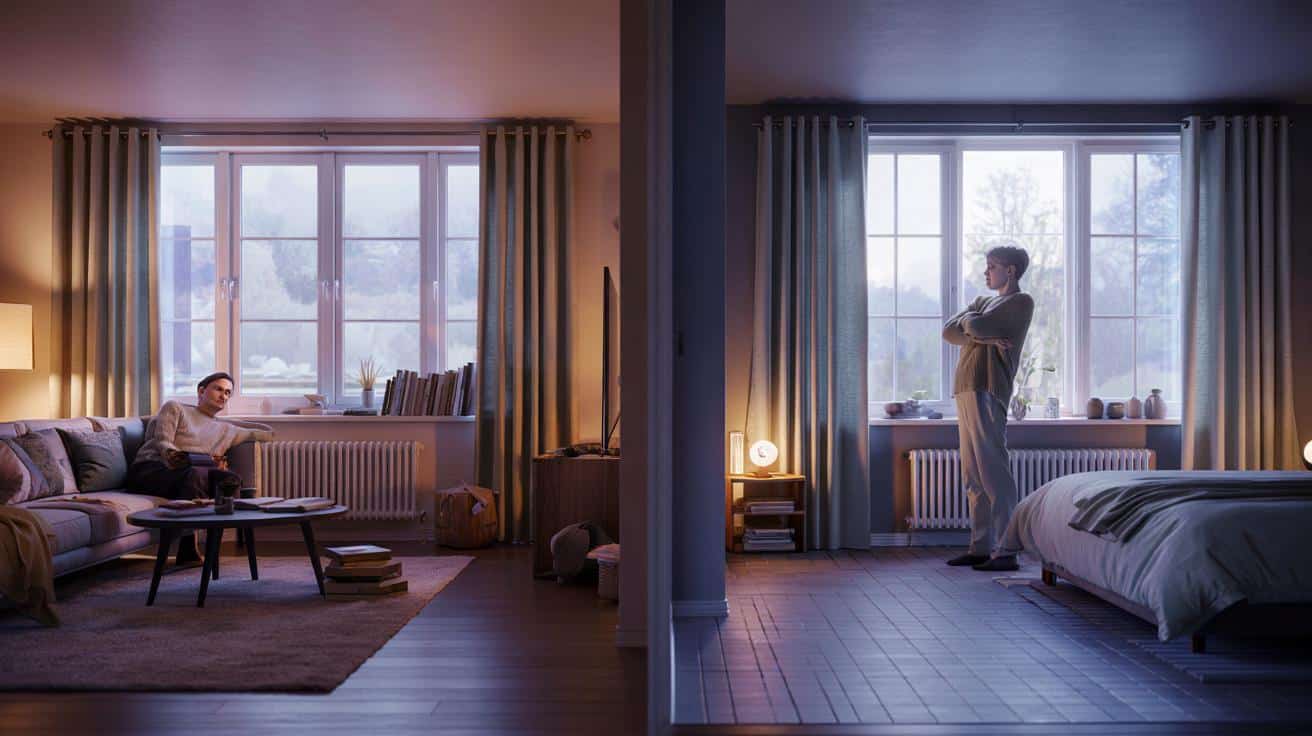
You cross the hallway, same heating, same house… and suddenly the living room feels cozy while the bedroom bites at your fingers. You check the radiators, put your hand on the wall, open and close the door as if the cold might leak out somewhere obvious. Nothing. Just that strange, stubborn chill. The kind that makes you grab an extra sweater even though the numbers look “perfect” on paper.
You’re not imagining it. Some rooms really do feel colder, even when they’re technically at the same temperature.
Why one room feels like winter while the other feels like a hug
The most basic reason is almost insultingly simple: what you feel as “cold” isn’t just air temperature. It’s a mix of air, surfaces, humidity, airflow and even what you’re doing in the room. A bedroom with a big north-facing window and bare wooden floor will never feel like a small study packed with books and curtains, even if both are at 20°C.
Cold walls and windows quietly steal your body heat through radiation. Your skin “sees” those cold surfaces and gives up warmth to them, so you feel chilled. Your thermostat has no idea that’s happening. It only sees air temperature and happily declares everything “fine”.
The room doesn’t care what the number says. Your body does.
Think of a typical winter evening. You walk into a modern open-plan kitchen with spotlights, a simmering pot on the stove, appliances humming. It feels alive. The oven throws out warmth, steam adds a hint of humidity, people move around. Five minutes later you go into the spare room where nobody goes. One small radiator, thin curtains, a bare bed, an exterior wall. Same heating schedule. Completely different sensation.
Energy surveys across Europe show this isn’t rare. In many homes, temperature differences of 2–3°C between rooms are common, even when the heating is supposedly “even”. Yet what people report as comfort or discomfort often doesn’t match the thermometer at all. A lounge at 19°C with thick carpets and soft furnishings can feel warmer than a tiled bathroom at 22°C.
Your brain registers the story the room tells: bright or dim, echoing or padded, dry or slightly humid, draughty or still. The story often outweighs the number.
Underneath that story, the physics is boringly consistent. Cold air sinks, warm air rises. Rooms with high ceilings collect warm air above your head while your feet stay in the cool layer below. Exterior corners leak heat through walls, creating cold “pockets”. Poor insulation means the walls themselves sit at a lower temperature than the air, so you radiate heat toward them and feel chilled even in a 21°C room.
Windows are repeat offenders. Single glazing or old frames create a cold glass surface that drags down the average radiant temperature of the room. Your body senses that cold panel like a slab of ice, especially when you sit nearby. Add in draughts under doors, poorly balanced radiators, or a thermostat placed in the wrong room, and suddenly your “evenly heated” home becomes a patchwork of climates.
➡️ For years, a woman used a stone as a doorstop… only to learn it was worth a million euros
➡️ France Moves To Lock In Europe’s Grip On A Battery Material That Could Decide The Future Of Cars
➡️ Goodbye steaming : the best way to cook broccoli to keep nutrients plus easy recipes to try
➡️ Losing weight in older age: Which type of training actually works best?
➡️ Not 65, not 75 : the highway code has decided, here is the real age limit for driving
What feels like a mysterious cold room is often just several small, invisible losses working together.
Small adjustments that make cold rooms feel instantly warmer
One of the fastest wins is to work on the surfaces, not the thermostat. If a room feels colder than the rest, look first at what’s touching your body and your line of sight: floors, windows, walls. A big rug over bare boards or tiles can transform how your feet interpret the space. Heavy curtains, even cheap ones with a thermal liner, change the way the room “radiates” back at you.
Try this experiment for a week: use a basic digital thermometer and put it in your “cold” room and in the cozy room you like best. Don’t touch the thermostat. Just live normally and see what you learn.
You’ll often discover the air temperatures are similar, but the way you use the rooms is not. That discovery changes everything about how you fix the problem.
On paper, heating experts love talking about zoning, valve balancing, and insulation layers. In real life, the fixes often start on a Sunday afternoon with a roll of draught tape and a bit of furniture shifting. Move your sofa away from the coldest wall and closer to an inner wall or nearer a radiator. Close gaps under doors with a simple door snake. Seal the small cracks around window frames that whistle on windy days.
On a UK housing survey, many households reported “cold spots” near windows and doors even after turning up the heating, and most of those spots traced back to tiny, fixable air leaks. Warm air was leaving just fast enough to keep the room in a permanent chill. Once those leaks were reduced, people often turned the thermostat down.
We all know the theory—insulate, seal, layer. *The real battle is between what you know and what you actually have the energy to do after work.*
The logic behind these tweaks is straightforward. Radiators can’t do their job if they’re blocked by furniture or buried under heavy covers. Air can’t circulate if thick curtains hang over the radiator and trap heat behind them. A room can’t hold onto warmth if a constant draught sweeps it out.
Check your radiators: if the “cold” room’s radiator is only hot at the top, it may be full of air and need bleeding. If it’s barely warm compared to others, the valve might be partly closed or the system unbalanced, sending more hot water to other rooms. Sometimes the room with the thermostat gets all the attention, while the others get leftovers.
Soyons honnêtes : personne ne fait vraiment ça tous les jours, mais taking one focused hour to bleed radiators, clear space around them and fix the worst draughts can shift a room from “avoid at all costs” to “actually nice” without raising your bills.
“Comfort is not a luxury add-on to heating; it’s the whole point of it,” says one building physicist I spoke to. “The mistake is thinking comfort equals one number on a thermostat. Your body doesn’t work that way, and neither does your home.”
Once you start looking at your home through that lens, patterns appear. The north-facing office with the glass desk and tiled floor. The bathroom that never seems to lose the chill from the exterior wall. The child’s room under the roof, sweltering in summer and shivering in winter. All “same heating level”, all wildly different to live in.
- Use rugs and soft furnishings in rooms with hard floors.
- Layer window treatments: blinds plus curtains beat either alone.
- Bleed radiators once or twice a season, especially in upstairs rooms.
- Keep big furniture at least a few centimetres away from radiators and exterior walls.
- Block obvious draughts under doors and around windows before touching the thermostat.
Rethinking warmth as something you feel, not something you set
The more you pay attention, the more you see that “cold rooms” are often about relationships. Where you sit in relation to a window. How the air moves around your ankles. Whether the lighting is harsh and blue, or warm and low. Two rooms at 20°C can feel worlds apart because one invites your body to relax, and the other keeps it slightly on guard.
We rarely talk about that side of heating. We talk about bills, systems, technology. We don’t talk as much about the small rituals: closing curtains at dusk, putting on slippers, lighting a warm-toned lamp instead of a cold overhead light, moving a chair away from the draught you always pretend not to notice. Those rituals are part of the thermal landscape of a home, just as much as radiators and boilers.
On a quiet evening, walk slowly through your home and notice where you unconsciously speed up because it “feels cold”. Touch the walls. Stand by the window for a minute instead of rushing past. Sit where your guests sit. You’ll find the blind spots that your thermostat never will.
There’s also a social layer hiding behind this story. People often “sacrifice” one room, deciding that the spare room or the hallway or even a bedroom will simply be the cold one. Heating gets turned down there, windows stay bare, nobody invests time or money in making it pleasant. The room turns into a kind of thermal exile zone.
Yet turning a single cold room into a usable, comfortable space can change the way you use your home. It can spread activity more evenly, relieve pressure on the one warm room where everyone piles in, and sometimes even let you heat the whole place a little less aggressively. A second cozy spot equals less crowding around that one overworked radiator in the lounge.
On a deeper level, a home where every room feels roughly welcoming sends a subtle message: you’re allowed to use all of this space, not just one “good room”. That can matter on long winter evenings when the dark outside already shrinks your world.
| Point clé | Détail | Intérêt pour le lecteur |
|---|---|---|
| Température ressentie ≠ température de l’air | Murs, fenêtres, sols et humidité changent la sensation de chaleur sans changer le chiffre sur le thermostat. | Comprendre pourquoi certains pièces semblent glaciales alors que le chauffage est le même. |
| Draughts et déséquilibre de radiateurs | Fuites d’air et radiateurs mal purgés ou mal réglés créent des zones froides locales. | Repérer des problèmes concrets et faciles à corriger soi-même. |
| Surfaces et aménagement | Rugs, rideaux, placement des meubles et éclairage influencent directement le confort thermique. | Obtenir plus de confort sans augmenter la facture de chauffage. |
FAQ :
- Why does my bedroom feel colder than the living room at the same thermostat setting?Your bedroom probably has colder surfaces (exterior wall, larger window, thinner floor covering) and fewer internal heat sources. Your body loses heat to those cold surfaces, so you feel chilled even if the air temperature matches the living room.
- Is it worth bleeding radiators in just one cold room?Yes. A radiator that’s hot only at the top or unevenly warm won’t heat the room properly. Bleeding it can restore full surface heat and often makes a noticeable difference in that single room.
- Can curtains really make a room feel warmer?Thick or lined curtains help in two ways: they reduce draughts and raise the average radiant temperature near the window. Sitting next to a well-dressed window usually feels much cozier than next to bare glass.
- Does moving furniture away from radiators actually help?It does. Large sofas, beds or cabinets in front of a radiator trap heat behind them, limiting circulation. Even a small gap between the radiator and furniture lets warm air move into the room.
- Should I install a second thermostat for my cold room?If you have a modern system, adding zoning or a smart thermostat for key rooms can help. But start with basics: draught-proofing, radiator checks, rugs, and window treatments often give cheaper, faster gains in comfort.







