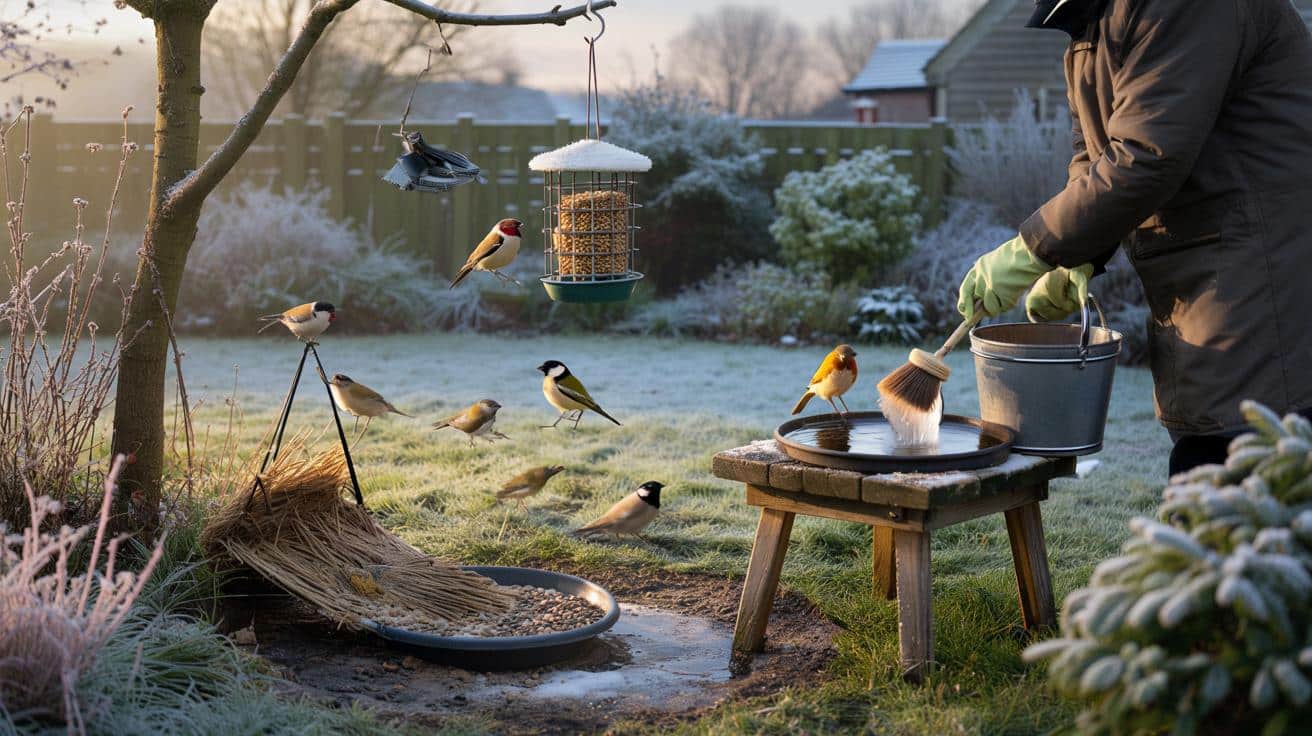
Across the UK and US, bird tables are packed with finches and tits jostling for sunflower hearts and fat balls. That feel‑good scene hides a less charming reality: if feeders and bird baths stay dirty, they can spread lethal infections faster than most people realise.
When the winter buffet becomes a health hazard
Putting out food concentrates birds in a tiny space. In nature, they forage over hedges, fields and woodland edges, rarely crowding shoulder to shoulder.
At your feeder, that changes overnight. Dozens of birds land on the same perches, wipe their beaks on the same edges and stand in each other’s droppings.
One grim truth: a single sick bird can turn a popular feeder into a hot spot for infection within days.
Close contact means shared saliva, shared faeces and shared surfaces. Add damp weather and rotting seed, and your generous feeding station starts to behave like a petri dish.
The dirty mix under your feeders
Look beneath any busy feeder on a wet January day and you will usually find a matted carpet of husks, droppings and trampled seed.
Rain and snow soak this organic layer. Birds such as dunnocks, robins and sparrows then hop through it, pecking at whatever looks edible.
Damp seed quickly grows mould. Fungal toxins can damage birds’ digestive systems, while bacteria thrive in the nutrient‑rich slurry underfoot.
Food contaminated with droppings is one of the main routes for disease to race through local bird populations.
➡️ At last, an overpowered electric mountain bike for cheap at Decathlon
➡️ I do this every Sunday”: my bathroom stays clean all week with almost no effort
➡️ Most people don’t realize how often they pay twice for the same thing
➡️ IKEA brings a cult sofa back from the dead after 50 years – design fans rush to get one
The invisible killers at your bird table
Two names crop up again and again in winter garden bird die‑offs: trichomonosis and salmonellosis.
Both are microscopic, both spread easily at crowded feeding stations, and both can wipe out whole groups of finches or sparrows in a single neighbourhood.
Why winter conditions boost disease
Cold weather feels clean to humans, but for microbes the picture is different. Moist, slowly decomposing seed and droppings create small pockets of warmth and shelter.
At the same time, birds are burning energy to stay warm and may struggle to find natural food. Their immune systems can weaken, so they succumb more quickly to infections they might shrug off in June.
Spotting a sick bird in your garden
Many people mistake a seriously ill bird for one just “fluffed up against the cold”. The details matter.
- Healthy birds look alert, react fast and fly off as you approach.
- Unwell birds often sit hunched for long periods, barely moving.
- Feathers appear puffed and untidy, eyes half‑closed.
- Some may drool, breathe with difficulty or struggle to swallow seed.
These symptoms, especially around finches and doves, are strongly linked with trichomonosis. At that stage, topping up feeders is not the priority. Breaking the chain of infection is.
Why cleaning matters more than refilling
Many wildlife organisations now share the same blunt advice: feeding in filthy conditions can be worse than not feeding at all.
The kindest winter gift for garden birds is not an extra scoop of seed, but a clean, safe place to eat and drink.
Think of yourself as a host running a café. You would never serve fresh food on a plate smeared with leftovers. Birds deserve the same basic standard.
Never pour fresh seed onto a dirty surface
Before each refill, check the state of your feeder or tray:
- Clumped, damp seed stuck to the bottom
- Visible droppings on perches or edges
- Greenish films or black mould in corners
If you see any of these, empty the feeder completely. Throw old seed in the bin or into a covered compost heap well away from where birds feed.
Adding new seed on top of mouldy remains re‑infects the whole batch at once. It feels wasteful, but that small loss of seed can prevent much larger losses of life.
Move your feeding stations around the garden
Leaving a feeder in one place all winter lets waste build up under it. Over weeks, that patch of soil turns into a high‑risk zone for ground‑feeding species.
Shifting feeders by a few metres every couple of weeks spreads the impact. Soil organisms can then break down droppings and husks more effectively, without becoming overloaded.
Frequent moves also make hunting slightly harder for cats and sparrowhawks that have memorised birds’ flight paths.
A simple weekly disinfection routine
A regular schedule stops cleaning from becoming an occasional, easily forgotten chore. During the coldest months, once a week is a good baseline for busy feeders.
| Step | What to do |
|---|---|
| 1. Empty | Remove all remaining food and shake out loose debris. |
| 2. Scrub | Use hot, soapy water and a stiff brush on all surfaces. |
| 3. Disinfect | Rinse, then apply a mild bleach solution (around 5–10%). |
| 4. Rinse again | Thoroughly flush with clean water to remove any trace of bleach. |
| 5. Dry | Air‑dry completely before adding fresh food. |
Using bleach without harming wildlife
For stubborn bacteria such as Salmonella, gentle methods sometimes fall short. A dilute household bleach solution used carefully can make a big difference.
Key points for safe use:
- Only use on feeders and bird tables, never directly on soil or plants.
- Stick to a weak solution: roughly one part bleach to nine–nineteen parts water.
- Let it sit for several minutes, then rinse until no smell remains.
Any lingering chlorine odour can irritate birds’ airways. If you can still smell it, rinse again and let the feeder sit outdoors, empty, for a few hours.
Drying matters as much as scrubbing
Refilling a damp feeder almost guarantees rapid mould growth. Wood in particular holds moisture deep in its grain.
Set washed feeders in sunshine or a warm, ventilated room until they are bone dry. Many keen bird‑watchers keep a spare feeder so one can be in service while the other is drying after cleaning.
Do not forget the water bowl
Birds are slightly desperate for liquid water on frosty days. Dehydration adds extra stress on top of the cold.
Yet bird baths and drinkers often get far less attention than seed feeders, even though shared water spreads germs very efficiently.
A murky bird bath is like passing the same unwashed glass around an entire village.
Standing water as a disease hub
When a sick bird drinks, it can shed pathogens straight into the water. Every visitor after that takes a sip from the same contaminated pool.
In winter, water may look clearer than in summer, because algae grow more slowly. That does not mean it is clean. Bacteria can still be present in large numbers.
Fresh water, every single day
Empty and refill bird baths daily. While you are there, give the bowl a quick scrub to remove slime and droppings.
On icy mornings, use lukewarm tap water to melt the surface and refill the dish. Avoid hot water that might crack ceramic or stone.
Never add salt, glycerine or car antifreeze to stop freezing. These substances are toxic, and small birds have almost no margin for error with such chemicals.
Winter housekeeping for nest boxes
Many people think of nest boxes only in spring, but for small species like wrens and tits they are also shared winter bedrooms.
Several birds may cram into a single box on cold nights, pressing tightly together to conserve heat.
Clearing old nests and parasites
Old nesting material often harbours fleas, mites and ticks. Leaving it in place means new occupants will sleep directly on a parasite load.
On a mild, dry day, check that the box is not currently in use, then open it and remove last year’s nest. A stiff brush will dislodge dust, droppings and spiders’ webs.
Chemical sprays are rarely needed and can leave residues in the wood. Clean, bare timber is usually enough.
Creating a healthy winter dormitory
After brushing out the box, make sure the floor is dry. A thin layer of untreated wood shavings or dry sawdust can help absorb moisture.
For birds that huddle together, a clean, dry interior reduces both parasite load and respiratory problems. You are not just offering shelter from the wind, but also a safer microclimate.
Practical scenarios and extra winter tips
If you suddenly spot several lethargic finches in your garden, the recommended response is firm but simple: take all feeders down for at least two weeks, clean them thoroughly, and rake up waste seed from the ground. Allow local birds to disperse and feed elsewhere while the infection burns out.
Feeding can then restart with stricter hygiene: smaller amounts of food more often, regular moving of feeders, and weekly cleaning as routine rather than exception.
Two small layout tweaks also reduce risk. First, use feeders that minimise droppings falling into food, such as tube feeders with drainage and narrow perches. Second, avoid flat trays that let birds stand in their own waste while eating.
There is also a balance to strike between feeding intensity and natural foraging. If your garden is rich in seed‑heads, berries and dense shrubs, you can offer slightly less concentrated food and still support birds. This reduces crowding and lowers disease pressure, while still giving wildlife a reliable winter lifeline.







