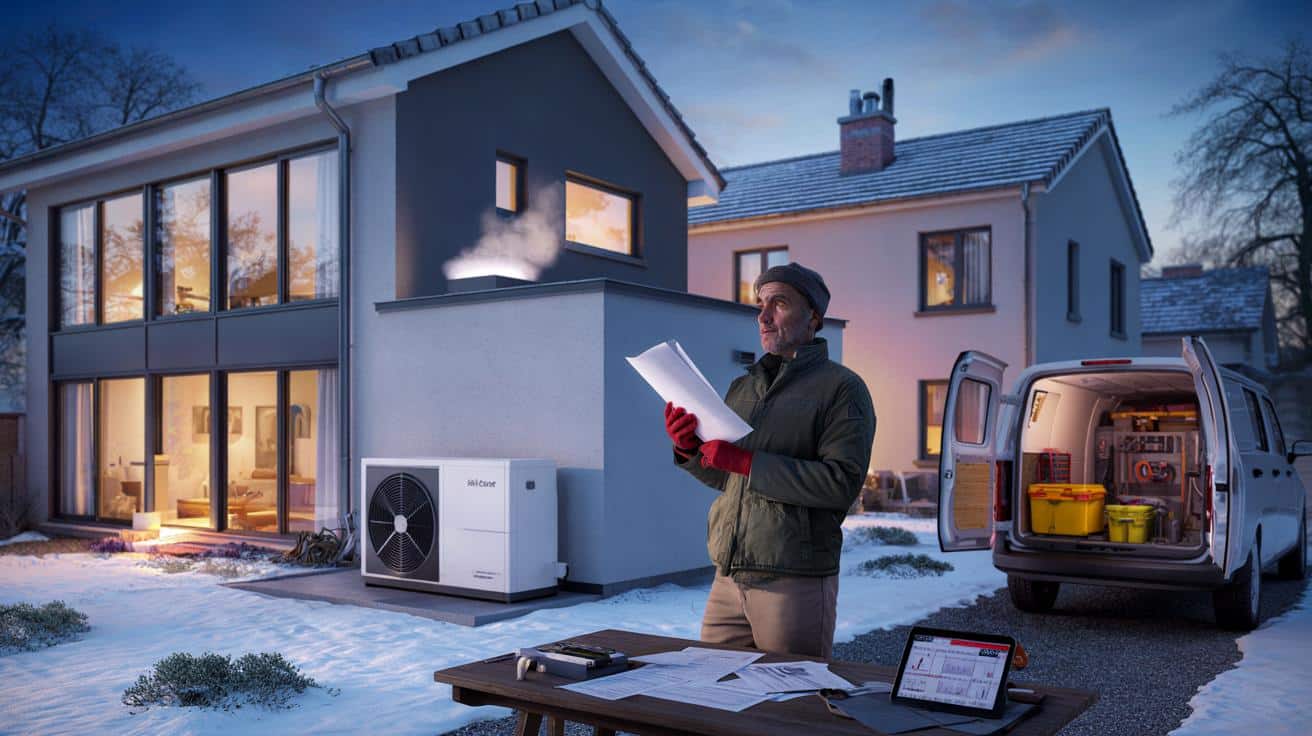
Across Europe, and especially in France and the UK, heat pumps have been sold as the future of home heating. Generous subsidies, glossy adverts and urgent climate targets have pushed the technology into the spotlight. But behind the sales pitch, a growing number of homeowners report big bills, mixed performance and technical headaches.
High upfront costs that cool enthusiasm
For most families, the first shock is the quote. Air-source and ground-source heat pumps usually demand a five-figure budget including installation. In France, typical prices range from around €10,000 to €20,000; in the UK, £8,000 to £15,000 is common once radiators and system tweaks are added.
State grants and low-interest loans soften the blow on paper, yet the outlay often still feels out of reach for a middle-income household.
Subsidy schemes such as MaPrimeRénov’ in France or the Boiler Upgrade Scheme in England can knock thousands off the bill. Still, many owners compare the cost to a conventional gas boiler replacement and feel they are being asked to take a risky financial leap.
Then comes the second surprise: heat pumps do not behave the same way in every building. Their performance depends heavily on:
- the quality of insulation and airtightness
- the size and layout of the property
- the climate and typical winter temperatures
- the design of the radiators or underfloor system
A modern, well-insulated home with underfloor heating can see impressive results. An older stone house with thin walls and small radiators may need major upgrades before a pump performs well. Without this work, comfort can suffer and bills can rise.
Energy savings that look better on paper than in January
Heat pumps are usually advertised with a flattering “coefficient of performance”, or COP. This indicates how many units of heat you get from one unit of electricity. A COP of 3, for instance, means three kilowatt-hours of heat for each kilowatt-hour of electricity consumed.
Those figures are often measured in mild conditions in a test lab. Real life looks different.
When outdoor temperatures drop close to freezing, many air-source heat pumps lose efficiency and lean more heavily on electricity.
➡️ “A-line bob” haircut: this bob is perfect for fine hair and will be very trendy for back-to-school
➡️ Psychologists reveal the three colors most often chosen by people with low self-esteem
➡️ Iguanas Drop From Florida’s Trees as Record Cold Blasts Southern US : ScienceAlert
➡️ Do it this week: 7 aromatic herbs to plant so you’re sorted for years
➡️ How to protect young seedlings from diseases and pests in February: experts’ tips
In northern France, Scotland or the English Midlands, a mild November day can feel encouraging: the pump runs gently and electricity use looks reasonable. A cold snap in January can tell another story. Power demand climbs, backup electric heaters may kick in, and the household’s electricity bill jumps.
This leads to a gap between the savings people expected and what they actually see. If a family previously heated with cheap gas, the switch to an all-electric system can feel punishing unless the house is very well insulated and tariffs are carefully managed.
When the green pitch clashes with the grid
There is also a bigger question behind those individual bills: the resilience of national power grids. Large-scale heat pump adoption raises winter electricity demand. In countries where peak loads are already tight, this creates challenges for grid operators and can influence future electricity prices.
That context rarely appears in the glossy brochures promising effortless savings and a light conscience.
Maintenance, lifespan and the real cost over 15 years
Supporters of heat pumps often highlight that they last longer than a gas boiler. In theory, 15 to 20 years of service is possible. In practice, that depends on careful installation, regular checks and good-quality components.
Owners quickly learn that a heat pump is closer to a sophisticated air-conditioning system than a simple boiler – and needs similar attention.
Key tasks include:
- annual or biennial servicing by a qualified technician
- checks on refrigerant gas levels and possible leaks
- cleaning of filters and outdoor units, especially in polluted or coastal areas
- software updates and settings optimisation
Each visit adds to the lifetime cost. When something fails out of warranty – a compressor, an electronic control board – the bill can quickly run into four figures. Some users report needing major repairs earlier than expected, wiping out several years of savings.
| Cost element | Typical range (air-source heat pump) |
|---|---|
| Installation (after subsidies) | £5,000 – £10,000 / €6,000 – €12,000 |
| Annual servicing | £120 – £250 / €150 – €300 |
| Major repair within 10 years | £500 – £2,000 / €600 – €2,300 |
These figures do not mean a heat pump is always a bad deal. For some homes, particularly off the gas grid or previously reliant on oil, the total cost of ownership can still look favorable. The problem is that many buyers never see a realistic long-term cost breakdown before signing a contract.
A reputation damaged by overselling and poor advice
Across France and the UK, consumer groups describe a similar pattern: aggressive sales, rushed assessments and promises that gloss over constraints. Households are told they will slash their bills without a careful study of their building’s heat demand and fabric.
When expectations are set sky-high, even a decent outcome can feel like a disappointment – and a bad installation becomes a scandal.
Common complaints include:
- noise from outdoor units in small gardens or courtyards
- radiators that never feel properly hot because the system runs at lower temperatures
- underpowered units that struggle in cold weather
- installers disappearing once subsidies have been paid out
This leaves some owners feeling misled and angry, especially if they financed the project via loans on the promise of rapid payback. Social media amplifies those negative experiences, feeding a narrative that heat pumps are “a scam” – even when the core technology itself is sound.
When does a heat pump actually make sense?
Despite the backlash, many installations work well and deliver steady comfort at lower emissions. The difference often lies in preparation and context.
The fewer kilowatt-hours your home needs, the more forgiving a heat pump becomes.
Good candidates tend to share several traits:
- thick insulation in walls and loft
- high-performance windows and reduced air leaks
- low-temperature emitters such as underfloor heating or large radiators
- a climate with cold spells but no extreme Arctic conditions
- residents willing to adjust habits, like steady heating rather than sharp on-off cycles
For these homes, a correctly sized pump can cut carbon emissions sharply and stabilise bills, especially if paired with smart controls and time-of-use electricity tariffs.
Alternatives and hybrid solutions for cautious households
Not every building is ready for a full heat pump transition. Some governments and installers are now pushing hybrid systems: a heat pump combined with a gas boiler or another backup heater. The pump handles the bulk of the load in milder weather; the boiler takes over when it gets very cold.
Other strategies include:
- starting with deep insulation and air-tightness work, postponing the heating system change
- keeping an existing boiler but adding solar thermal panels or solar PV to cut fuel use
- installing a smaller “bivalent” heat pump that works alongside existing equipment
These mixed approaches can reduce emissions gradually and give households time to adapt without betting everything on one complex machine.
Key terms buyers should understand
Before signing any contract, a few technical words deserve attention.
COP (coefficient of performance). This is a snapshot of efficiency at specific conditions. A COP of 4 may only apply at +7°C outdoor temperature. Ask for seasonal figures relevant to your region.
SCOP (seasonal coefficient of performance). This estimates efficiency over an entire heating season. It usually offers a more realistic picture than a single COP value, but still relies on assumptions.
Low-temperature system. Heat pumps work best when they only need to produce water at 30–45°C. Old radiators sized for 70°C water can force the pump to run harder, cutting efficiency.
A simple scenario: two identical houses, different choices
Imagine two similar 100 m² houses in a French regional town. One owner spends €15,000 on a heat pump without improving insulation. The other spends €8,000 on insulation, new windows and air sealing, and keeps a modern gas boiler for now.
The first household cuts emissions but sees modest bill savings, and complains about lukewarm radiators during cold snaps. The second burns less gas, enjoys improved comfort, and keeps annual costs controlled while watching how policies and technologies evolve.
Five years later, the insulated house is in a far better position to adopt a smaller, cheaper heat pump. The investment risk is lower, and the system will operate closer to its advertised performance.
Practical checks before you commit
Anyone tempted by a heat pump can reduce the risk of disappointment by asking a few pointed questions:
- Has a proper heat-loss calculation been carried out for the building?
- What indoor temperature and outdoor design temperature were used?
- How will existing radiators or underfloor circuits be adapted?
- What SCOP does the installer expect in this specific location?
- What are the annual maintenance costs and warranty conditions?
A case where the numbers look marginal, or where the installer cannot answer these questions clearly, is a warning sign. In some situations, waiting, improving insulation first, or opting for a hybrid or alternative solution may serve the household better than rushing into the latest subsidy-fuelled trend.







