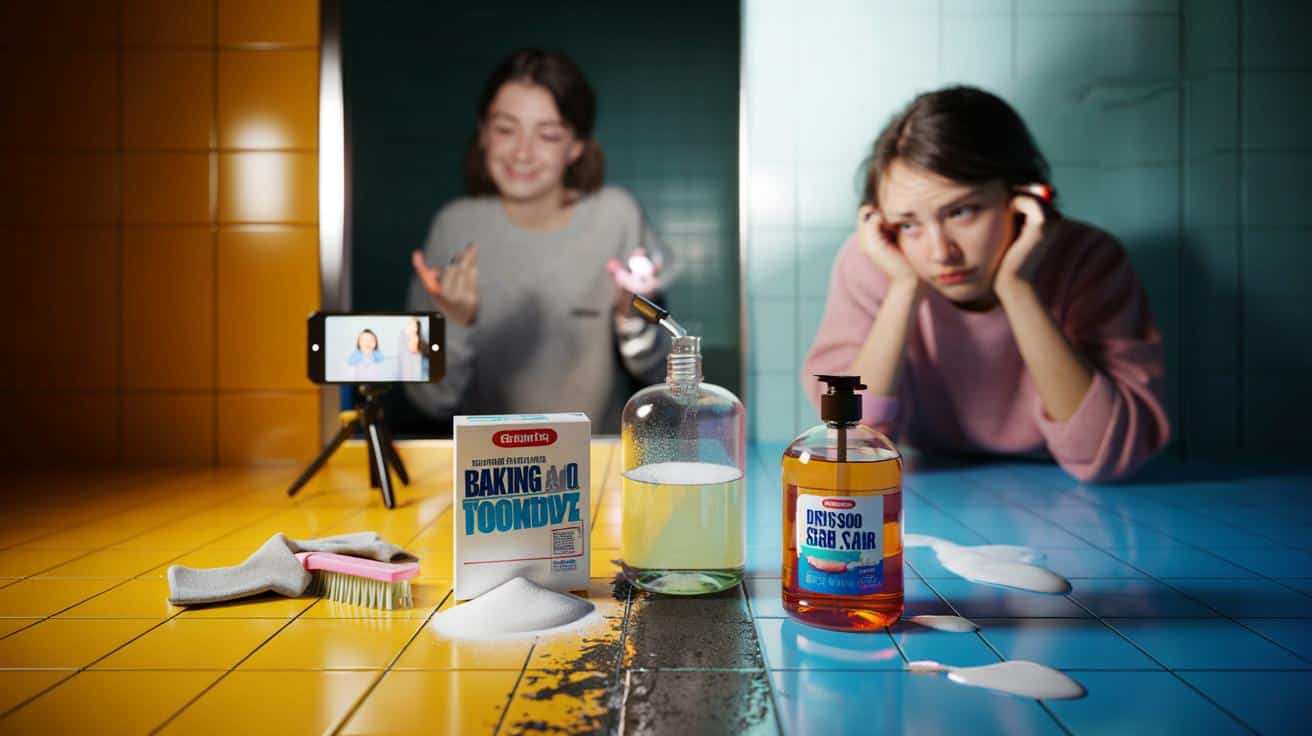
The video lasts 34 seconds. A young woman in a spotless sweatshirt kneels on a bathroom floor, smiles at the camera and sprinkles white powder between the tiles. A bit of liquid from a glass bottle, a quick scrub, a wipe with a microfiber cloth… and suddenly the grout transforms from yellowish grey to bright hotel white. The caption reads: “3 kitchen ingredients and your tiles look NEW 💥 No chemicals!!”. Comments explode: “Witchcraft!”, “Where has this been all my life?”, “My landlord is going to be shook”.
Two scrolls further, another reel. Same trick. Different influencer. Same promise.
Yet away from the ring light, tilers and builders roll their eyes. Some even post their own stitched videos, accusing creators of editing, filters and straight-up lies. One thing is clear: the grout war has started.
Why TikTok swears by three kitchen ingredients for grout
The core recipe that keeps coming back is always the same: baking soda, white vinegar and dish soap. Three products you probably have in your kitchen, suddenly promoted to miracle cure for bathroom shame. Influencers love this combo because it looks harmless, cheap, and vaguely “science-y” with all the fizzing and foaming on camera. The foam reads as proof. The rub looks satisfying. The “after” shot feels like a makeover.
On screen, everything about it whispers: you can fix this yourself, right now, no specialist, no big bill.
One viral clip from the UK, viewed more than 12 million times, shows a renter cleaning a beige, streaky shower floor. She mixes two spoons of baking soda, a generous glug of dish soap, then sprays vinegar on top. The chemical fizz looks almost theatrical. She films the scrubbing in close-up, then cuts to an immaculate grid of white joints that could have been laid yesterday. The comment section fills up with “Just tried this!!!” and a string of heart emojis.
Only down in the replies do doubts appear. One user asks why her own grout “didn’t change at all”. Another posts a photo of crumbling joints, claiming the method “destroyed the grout in one go”.
That gap between the promise and those disappointing photos is exactly what makes professionals bristle. From a builder’s point of view, grout isn’t just some decorative dust between tiles. It’s a cement-based or epoxy-based material, often sealed, with pores that trap dirt, soap, and sometimes mold. Vinegar is acidic. Used too often or in high concentration, it can slowly eat away at cementitious grout, especially if the sealant is already worn.
Baking soda, on the other hand, is abrasive. Great for surface stains, but overused it can scratch delicate glazes or dull certain tiles. What looks like “new grout” on video can sometimes just be wet grout, filtered lighting, or a spot that wasn’t that dirty to begin with.
What actually works when you try the viral grout recipe
If you still want to test the famous trio, the safest approach is to treat it like a spot treatment, not a lifestyle. Start with a paste: two parts baking soda, one part dish soap. Spread it gently along a short section of grout with a toothbrush, no more than a meter. Let it sit for 5–10 minutes, not an entire afternoon. Then lightly spray diluted vinegar (one part vinegar, three parts water) and let it foam for another minute.
➡️ This European country made over €36,000 for each resident in 2025 – but nobody can cash it out yet
Scrub with small circular motions, wipe away the slurry with a damp cloth, then rinse thoroughly with warm water. Only then decide if the result is worth going further.
A lot of people repeat those tricks every weekend, driven by the idea that grout should always be sparkling white. Let’s be honest: nobody really does this every single day. And even if they did, grout naturally ages, absorbs pigments, sometimes cracks. Over-cleaning can be as damaging as neglect. Professionals recommend testing any aggressive mix in a hidden corner, like behind the toilet or under a removable mat.
If your grout is already powdery, cracked, or hollow-sounding, that’s not a cleaning problem anymore. That’s a repair problem, and no influencer recipe will rewind the clock.
Tile setter Marc, who has been working on renovation sites for 20 years, told me: “Half the jobs I do now start with: ‘I followed a hack on Instagram and…’. The foam looks nice on video, but nobody shows the joints crumbling six months later.”
- Use diluted vinegar (1:3 with water), not pure, especially on cement grout.
- Limit baking soda scrubs to once every few months, not every week.
- Always rinse generously so no powder or soap dries in the pores.
- If stains persist or grout is pitted, consider re-grouting or recoloring instead of scrubbing harder.
- For epoxy or glossy tiles, favor pH-neutral cleaners and soft brushes.
Between filters and dust: where truth really lies on your tiles
There’s a quiet honesty in standing in your bathroom with real light, real dirt, and no filters. That’s when you understand why builders get upset watching “miracle” clips shot under softboxes and edited with whitening tools. The truth sits somewhere between the hype and the eye-rolls. A well-measured mix of vinegar, dish soap and baking soda can absolutely refresh lightly stained grout, especially if it hasn’t been cleaned in a while. It can make tiles look brighter, joints less grey, floors more welcoming.
But no three ingredients in your kitchen drawer will reverse ten years of mold, hard water and soap scum layered into microscopic pores.
| Key point | Detail | Value for the reader |
|---|---|---|
| Understand the viral recipe | Baking soda + dish soap + diluted vinegar work mainly on surface stains | Know what to expect, avoid unrealistic hopes |
| Protect your grout | Acid and abrasion, used too often, weaken cement-based joints | Prevent damage and costly re-grouting later |
| Know when to stop | Persistent dark spots, crumbling, or hollow grout signal a repair need | Decide between DIY cleaning and calling a professional |
FAQ:
- Question 1Can the three-ingredient mix really make my grout look new?
- Question 2Is vinegar dangerous for all types of grout and tiles?
- Question 3How often can I safely use baking soda on my floor?
- Question 4What should I do if my grout crumbles after cleaning?
- Question 5Why do my results look nothing like the influencer videos?