Across Europe and North America, more households are leaning on wood stoves and inserts for comfort and savings. But misjudging your wood order can leave you either shivering in February or stuck with a soggy, oversized pile in the garden.
What a “stère” actually means when you buy your firewood
If you’ve ever tried to order firewood in France or from a French supplier, you’ve probably come across the term “stère”. It’s not a type of wood, but a unit of volume.
Traditionally, one stère equals one cubic metre of logs that are each one metre long, stacked as neatly as possible. On paper, that sounds simple: 1 m³ of logs, one unit, job done.
A stère is 1 m³ of stacked logs cut to 1 m, but the apparent volume changes once those logs are cut shorter.
The catch: once those metre‑long logs are cut down to 33 cm or 50 cm to fit into your stove or insert, they can be stacked more tightly. There’s less air between the pieces, so the same quantity of wood takes up less space.
In practice, that means one “stère” of 1 m logs will occupy less than 1 m³ once cut. The mass of wood stays roughly the same, but the stacked volume shrinks. If you only look at cubic metres delivered, you might think you’ve been short‑changed when you haven’t.
From stère to real‑world volume
Suppliers sometimes sell by “stère équivalent” or by loose cubic metre. The numbers can be confusing. As a rough guide:
| Log length | Stacked volume for 1 stère equivalent |
|---|---|
| 1 m logs | ≈ 1.0 m³ stacked |
| 50 cm logs | ≈ 0.8 m³ stacked |
| 33 cm logs | ≈ 0.7 m³ stacked |
What really matters for your winter is not the apparent volume, but the energy stored in that wood: its mass, moisture content and species.
The five big factors that decide how much wood you’ll burn
1. The size and volume of your home
Heating 60 m² in a modest, low‑ceilinged house is nothing like heating a draughty 180 m² farmhouse. Ceiling height, open stairwells and mezzanines all increase the volume of air to warm.
➡️ Psychology highlights the three colors most often chosen by people struggling with low self-esteem
➡️ Psychology reveals the three colors most often chosen by people with low self-esteem
➡️ Got an Annoying Twitch? Here’s What to Consider Before You Think The Worst
A compact 80–100 m² house with standard ceilings and closed doors between rooms will need far less wood than a big open‑plan living space where heat races upstairs.
2. Insulation and airtightness
Two homes of identical size can burn radically different amounts of wood. Insulation and airtightness are the game changers.
A well‑insulated house can cut wood consumption by roughly 30–50% compared with a poorly insulated one of the same size.
Think double or triple glazing, insulated loft, cavity walls and a reasonably airtight shell. By contrast, an old stone house with single glazing, gaps under doors and uninsulated roof space will swallow logs at a worrying rate.
3. The type and efficiency of your appliance
A modern wood stove or insert certified with high efficiency (often above 75–80%) converts most of the wood’s energy into useful heat. An open fire loses the majority of its heat up the chimney while dragging warm indoor air out of the room.
Upgrading from an open fireplace to a modern insert or clean‑burn stove can almost halve your wood needs for the same comfort level. That also means less work stacking, carrying and lighting.
4. The species of wood you burn
Not all logs are equal. Dense hardwoods carry more energy per cubic metre and burn longer.
- Hardwoods (oak, beech, hornbeam, ash): slow burn, steady heat, ideal for main winter heating.
- Softwoods (pine, spruce, fir): light, quick ignition, intense but short‑lived flames.
Softwoods can be useful for kindling or quick boosts of heat, but you’ll load the stove more often. Mixed deliveries can make sense: hardwoods for overnight or long burns, softwoods for lighting and shoulder seasons.
5. Local climate and your habits
A family in Brittany or the south of England won’t face the same heating demand as someone in the Alps or Minnesota. The length and severity of your heating season matter a lot.
Lifestyle plays a role too. If someone is home all day and keeps the stove running low, consumption differs from a household that only lights up evenings and weekends.
How many stères for winter: occasional, backup or main heating?
Occasional use: fires for atmosphere
If your stove or fireplace is mostly for cosy evenings or the odd cold snap, you can get through winter on a modest stock.
For decorative or very occasional use, 1–3 stères of properly seasoned wood usually cover the season.
This suits well‑insulated homes already heated by gas, oil, heat pump or district heating, where the fire is mostly for pleasure.
Regular backup heating
Many households use a wood stove as a serious support to central heating, especially to cut bills during energy price spikes.
In this case, the stove may run several hours most days, but not 24/7, and other systems take over in extreme cold.
For regular backup heating, expect roughly 3–6 stères per winter, depending on house size and insulation.
A small, well‑insulated 70 m² home might sit closer to 3 stères, while a larger, average‑insulated 120–140 m² house can creep towards 6.
Wood as the primary heat source
Relying mainly on wood changes the scale. Here, the stove or insert runs daily throughout the season and often from morning until late evening.
For primary heating with a modern stove, typical needs range from 5 to 12 stères per year.
A highly efficient, well‑sized stove in a modern low‑energy home can stay near the lower end. A bigger, older, poorly insulated house can easily touch or exceed the higher end, especially in colder regions.
Practical ways to cut your wood consumption
Start with the wood itself
- Use seasoned wood: Moisture content should sit below about 20%. Wet logs waste energy evaporating water and cool your firebox.
- Choose suitable log length: Shorter logs (25–33 cm) stack more compactly and fit better in small stoves, giving more even, efficient burns.
A simple moisture meter is inexpensive and gives you real numbers instead of guesswork. Freshly cut wood can take 18–24 months to dry properly depending on species and climate.
Keep the stove and chimney clean
A dirty appliance reduces performance and raises risk. Ash buildup, clogged air inlets and creosote in the flue all nudge efficiency downward.
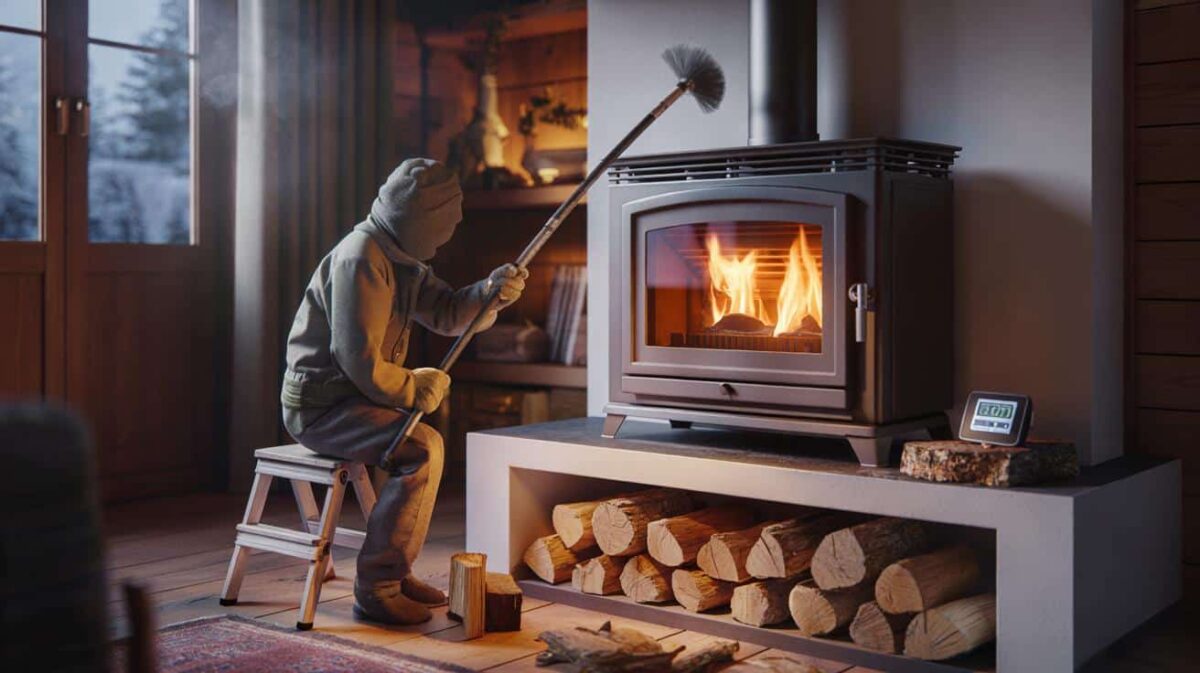
Yearly professional chimney sweeping, plus regular DIY cleaning of the stove, protects both your efficiency and your safety.
Good combustion also means less smoke, fewer particulate emissions and cleaner glass, so you actually see the flames you’re paying for.
Fix the worst heat leaks in your home
If a big retrofit isn’t on the cards, small upgrades still help. Think draught‑proofing doors and windows, adding or topping up loft insulation and using heavy curtains at night.
Stopping warm air from shooting straight out of the roof can cut your heating need noticeably. In many houses, the loft is responsible for a large part of heat loss, and it’s often the easiest area to improve.
Storing your logs so they stay dry and powerful
Storage can make or break your winter fuel. Even good hardwood loses a lot of value if it sits in a damp corner of the garden.
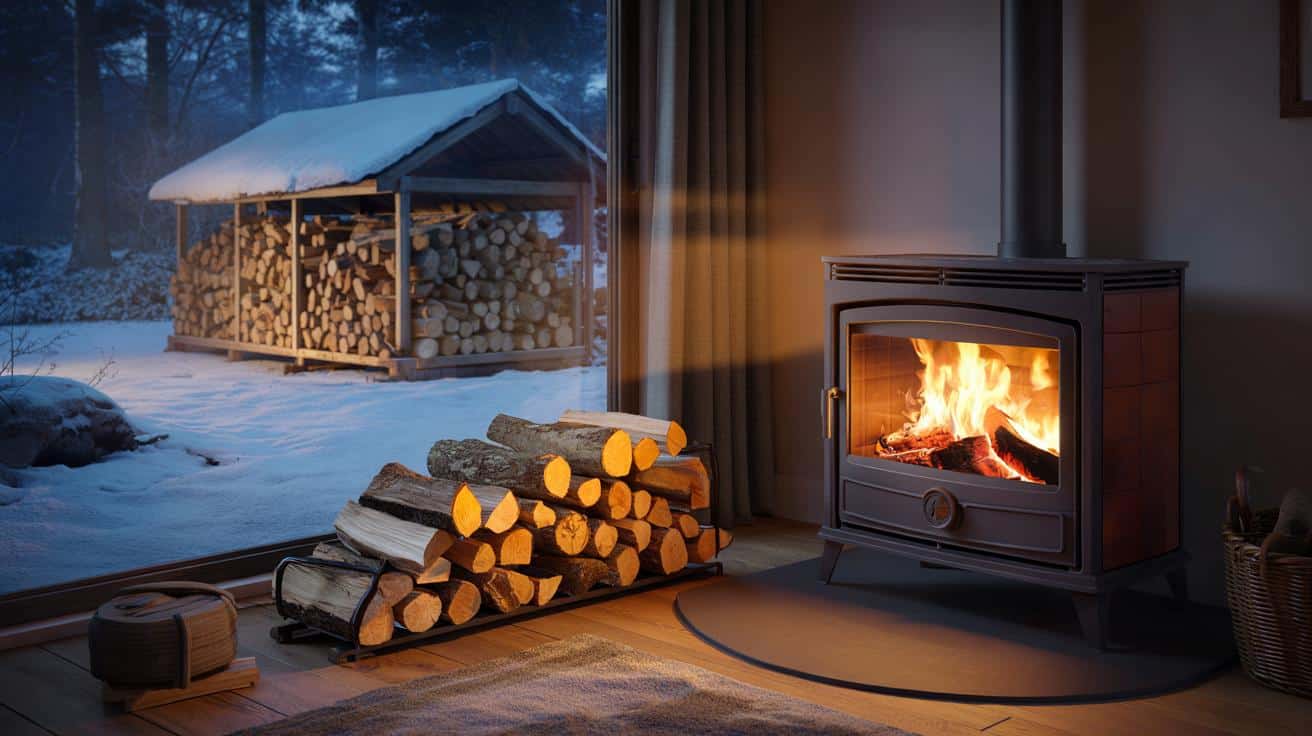
- Stack wood off the ground on pallets or rails to avoid rising damp.
- Keep it under a roof or tarp, but leave the sides open so air can pass through.
- Face the cut ends towards prevailing wind and sun for faster drying.
A well‑ventilated, covered store can finish drying “borderline” wood in a few months, while a tarp thrown flat on top often traps moisture.
Plan your stock so that the wood you burn this winter was mostly cut and stored at least one year earlier, two for very dense hardwoods like oak.
Concrete scenarios: what different households might expect
A small, well‑insulated house
Picture a 90 m² semi‑detached home, modern windows, decent loft insulation, in a mild climate. A high‑efficiency 7 kW stove used every evening and weekends, but not overnight.
This household might comfortably get through the season on around 3–4 stères of hardwood, plus a bit of softwood for lighting and shoulder months.
A large, older family home
Now think of a 160 m² detached house from the 1970s, partial insulation, older windows, in a colder region. A 10–12 kW stove runs as the main heat source from October to March, often from morning to night.
Here, annual needs can easily reach 8–12 stères of mixed hardwoods, especially if temperatures sit near freezing for long periods.
Key terms and hidden risks worth knowing
Two technical details can quietly undermine your winter plans: moisture content and “nominal power”. Moisture content, often shown as a percentage, measures how much water your wood still holds. Over 25% and the wood is hard to light, smoky and wasteful. Around or under 20% gives a cleaner, hotter burn.
Nominal power is the rated heat output of your stove in kilowatts (kW). Oversizing can be as problematic as undersizing. A stove that is too powerful for your space will be constantly throttled down, which leads to incomplete combustion, blackened glass and creosote deposits. All of that increases the amount of wood you burn for the comfort you get.
Taking time to match stove capacity, house needs and wood quality won’t just decide how many stères you order. It shapes your bills, the comfort of your living room, and how many evenings you spend hauling logs instead of simply enjoying the fire.