That number, 19°C, has been hammered into public advice for decades. Yet energy specialists now say this rigid rule may leave people shivering for no good reason, and in some cases, could even affect health. A more flexible, slightly warmer target is quietly emerging as the new benchmark for modern homes.
Why 19°c became the “good citizen” temperature
The 19°C guideline didn’t fall from the sky. It dates back to the energy crises of the 1970s, when governments across Europe pushed households to cut consumption fast. A simple rule was easier to promote than a nuanced conversation about comfort, insulation and lifestyle.
Over time, that number turned into a kind of moral threshold: heat above 19°C and you’re wasteful; heat below and you’re doing your bit for the planet. The problem is that homes, climates and people are far from identical.
19°C is a political and historical compromise, not a universal comfort law written into human biology.
What might feel fine in a compact, well-insulated flat in a mild city can feel bone-chilling in a draughty house in a windy region. Yet the same figure is often repeated, without nuance, in official advice, energy-saving campaigns and even social pressure between neighbours.
Why 19°c leaves many people feeling cold
Comfort isn’t just about the number shown on your thermostat. Several factors shift how warm or cold you feel at any given temperature.
The real drivers of thermal comfort
- Insulation quality: Poorly insulated walls, old windows and gaps under doors create cold drafts. At 19°C, such homes can feel significantly cooler than the reading suggests.
- Humidity levels: Very dry air makes you feel colder. A room at 19°C with low humidity can feel less comfortable than a slightly more humid room at 18°C.
- Activity level: Sitting at a desk, watching TV or working from home demands a warmer environment than cleaning, cooking or moving around.
- Clothing: A light T-shirt and bare feet at 19°C is not the same experience as wearing a jumper and socks.
- Radiant temperature: Cold walls, floors and windows “steal” heat from your body, so 19°C surrounded by chilly surfaces feels harsher than 20°C in a well-insulated space.
Energy advisers often report the same pattern: households “doing the right thing” at 19°C, yet constantly feeling on the verge of being cold. Many quietly nudge the thermostat up, then feel guilty when the bills arrive.
The idea that one single number works for all homes and all bodies is comforting – and totally unrealistic.
Why 20°c is emerging as the new comfort benchmark
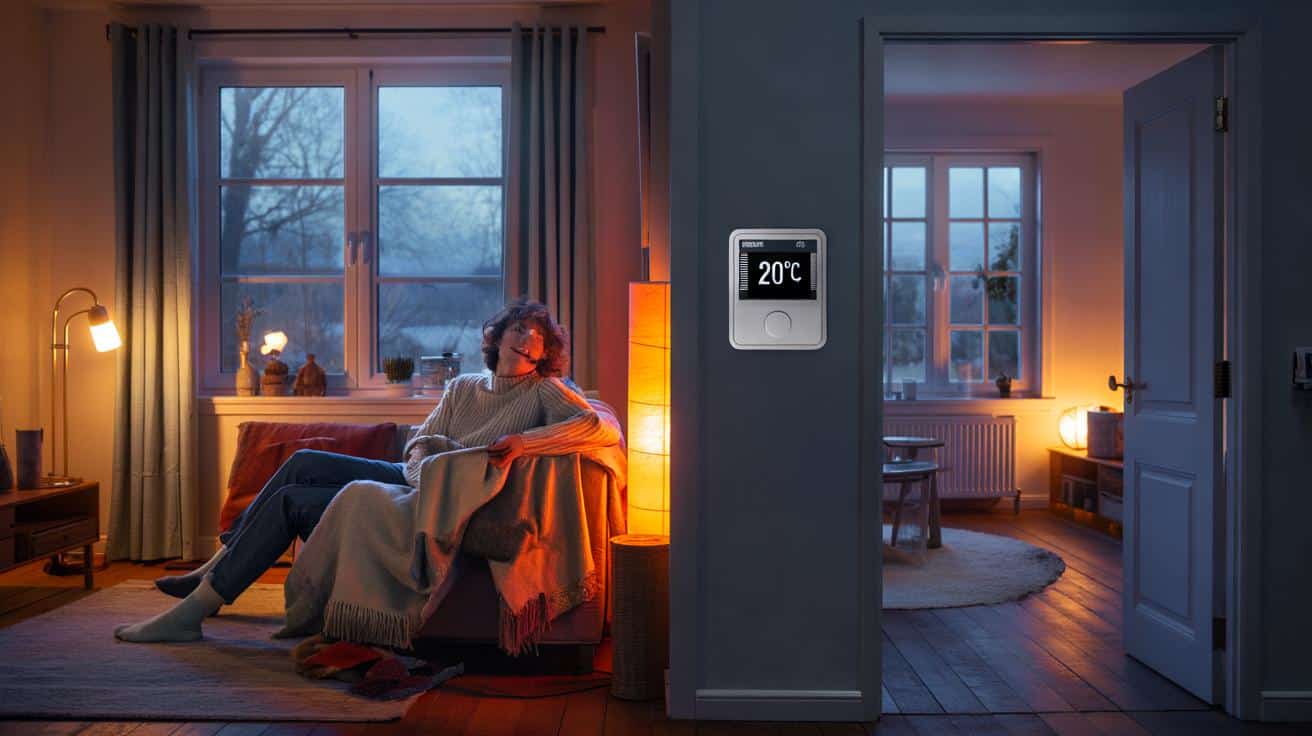
Increasingly, specialists in heating and building performance point to 20°C as a more realistic baseline for living areas in modern homes. That extra degree may sound tiny, but in lived experience, it can be the difference between “I can manage” and “I actually feel comfortable”.
➡️ How to identify who’s behind an unknown or blocked phone number
➡️ Psychology teams identify three recurring color preferences linked with fragile self-confidence
➡️ I made this classic American pot roast and finally understood the hype
➡️ “I thought my bathroom drains were fine until the smell proved me wrong”
➡️ 7 phrases older than 65 use that sound totally out of touch to young people
➡️ “A-line bob” haircut: this bob is perfect for fine hair and will be very trendy for back-to-school
The case for one extra degree
- Better perceived warmth: At 20°C, most people feel fine even when sitting still for hours, as is common with remote work or long evenings on the sofa.
- Limited impact on bills in efficient homes: In a reasonably insulated property, going from 19°C to 20°C does not send costs through the roof, especially if heating is well controlled.
- Aligns with many health recommendations: Several public health bodies suggest around 20°C for main living spaces, particularly where vulnerable people live.
Modern thermostats and smart heating systems strengthen the case for a 20°C target. You can maintain that comfort level at key times of day, while letting temperatures dip when everyone is out or asleep.
A well-managed 20°C can be greener, cheaper and healthier than a badly managed 19°C with poor insulation and no control.
Should every room be the same temperature?
Another common misunderstanding is that the entire home must sit at a single, fixed temperature. In reality, zoning your heating – adjusting temperatures by room and time of day – is one of the most effective ways to balance comfort and costs.
Typical target temperatures by room
| Room | Recommended range | Reason |
|---|---|---|
| Living room / main space | 19–20°C | Where you sit still, relax or work, so comfort matters most. |
| Bedrooms | 16–18°C | Cooler air generally supports better sleep while cutting energy use. |
| Bathroom (during use) | 21–22°C | Short bursts of higher heat prevent that post-shower chill. |
| Hallways, storage, utility rooms | 15–17°C | Limited time spent there, so no need for full comfort temperature. |
This kind of zoning can be done with thermostatic radiator valves, room thermostats or smart devices that control different areas separately. It prevents you from paying to keep little-used rooms as warm as your living room.
How to hold 20°c without wrecking your energy budget
Heating to 20°C in your main rooms does not mean bills must soar. The difference lies in the way you manage your home.
Practical steps that actually work
- Fix the envelope first: Seal obvious draughts around windows, doors and floorboards. Even cheap draft excluders and window film can make 20°C feel much warmer.
- Use a programmable thermostat: Set lower temperatures at night and while you’re out, then pre-heat before you wake up or return.
- Let the sun help: In winter, open curtains when the sun hits your windows, and close them at dusk to keep the gained heat indoors.
- Shut internal doors: Keeping warm and cool zones separated stops heat drifting away into unused areas.
- Maintain your system: Bleed radiators, service boilers or heat pumps and clean filters. A neglected system wastes energy for the same level of comfort.
Often, the cheapest degree is the one you gain through better insulation and smarter controls, not through cutting comfort.
When 19°c is simply too cold
While some healthy adults cope fine at 19°C, others do not. Certain groups are more sensitive to cold and may genuinely need 20°C or a bit more in day spaces.
Who needs warmer rooms?
- Older adults: Ageing bodies regulate temperature less efficiently, and cold homes are linked to increased hospital admissions in winter.
- Young children and babies: They lose body heat faster and may struggle in cooler environments.
- People with chronic conditions: Respiratory or cardiovascular issues, arthritis and some metabolic conditions can all worsen in chilly, dry air.
In these households, insisting on 19°C purely for environmental virtue can backfire. Cold homes contribute to respiratory infections, joint pain and general fatigue because the body works harder just to stay warm.
For vulnerable people, 20°C is not a luxury; it can be a basic health measure.
What an extra degree really costs
Many people hesitate to touch the thermostat out of fear that every extra degree will explode their bill. The real picture is more nuanced.
Energy agencies often cite a rough rule: cutting room temperature by 1°C can reduce heating use by around 5–7%. That works the other way as well: going from 19°C to 20°C may increase consumption by a similar proportion, all else equal.
Yet “all else equal” rarely applies. A leaky window, a door left ajar or radiators hidden behind heavy furniture can waste far more energy than one extra degree. In a reasonably efficient home, that additional comfort can be offset by simple actions like shortening shower times, sealing draughts, or lowering temperatures in unused rooms.
Thinking beyond the number on the thermostat
Two households can both set 20°C and live very differently. In one, people wear light clothes, open windows for long periods and leave doors wide open. In the other, they use rugs on cold floors, close curtains at night and program timed boosts in key rooms. The second home may end up using less energy at the same nominal temperature.
This is where the idea of “perceived temperature” becomes helpful. Your body responds not only to the air temperature but also to air movement, humidity and surface temperatures around you. Adding a thick rug, using a humidifier in very dry climates, or sitting away from draughty windows can all make 20°C feel warmer without touching the thermostat.
Practical scenarios to test in your own home
One simple experiment can help you find your personal comfort zone:
- Pick two weeks in winter.
- Week one: set your main room at 19°C and keep a quick note of how you feel at different times, plus how often you reach for blankets or extra layers.
- Week two: set the same space to 20°C. Keep similar notes, and also log any changes in how often the heating switches on, if your thermostat shows this.
- Adjust bedroom and hallway temperatures downward slightly to compensate where possible.
Comparing both weeks gives you a real-world sense of whether that extra degree genuinely improves daily life, and whether it adds much to your bill. In many cases, small tweaks elsewhere more than cancel out the additional heating demand.
For households juggling tight budgets and worries about emissions, this kind of measured approach can relieve some of the guilt around comfort. The conversation shifts from “am I allowed to set 20°C?” to “how can I manage 20°C intelligently, while cutting waste in other ways?”. That mindset tends to lead to warmer people, healthier homes and more thoughtful energy use.