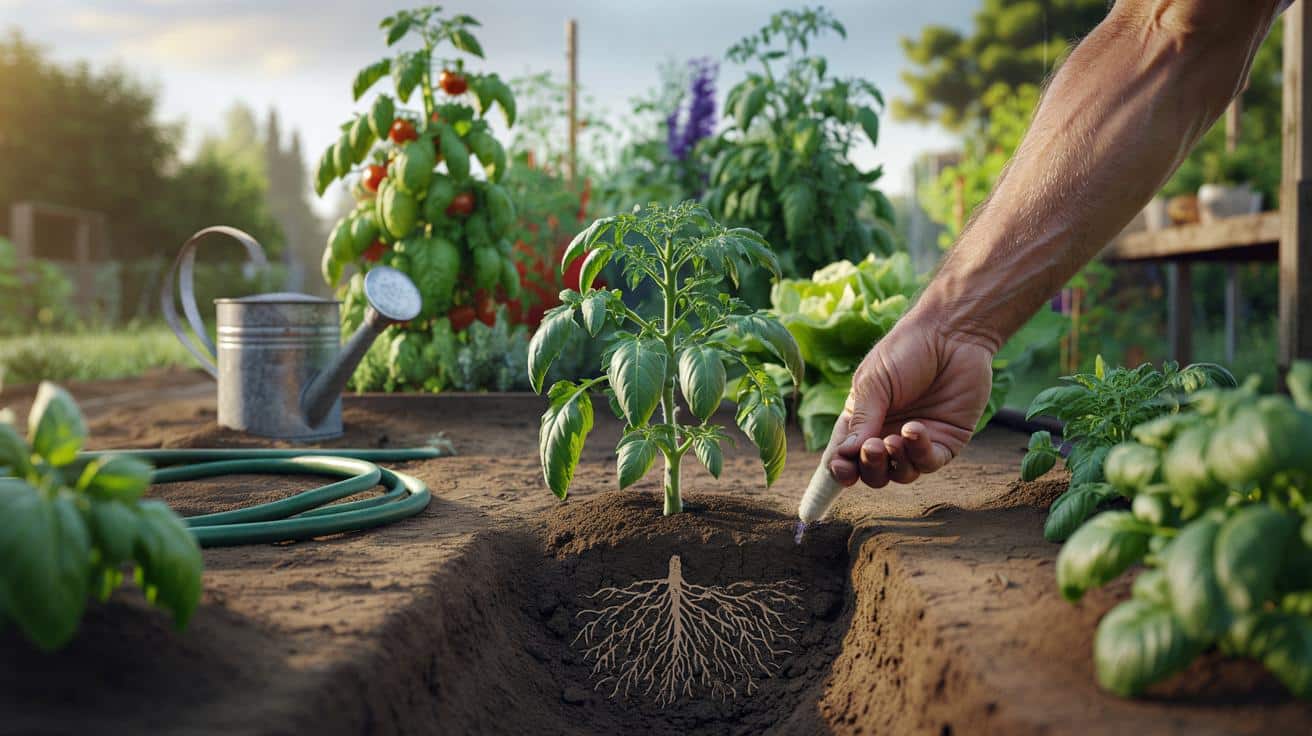
The hose was already uncoiled, the coffee still warm on the terrace, when I noticed the same thing that had been bothering me for weeks. Lush green leaves on top, a kind of jungle vibe in the beds, but the slightest gust of wind and my tomato plants bent like they were made of paper. I dug around a bit with my fingers. Shallow roots, circling near the surface, clinging to yesterday’s water like a bad habit.
I realised I’d slipped into autopilot: quick morning watering, a sprinkle every evening, a vague feeling of doing the right thing. The soil always looked damp. The plants looked “happy enough”. And yet, anything stronger than a breeze told another story.
That day I changed just one quiet part of my routine.
And the roots started to answer.
This small shift in watering changes everything underground
The first time you decide not to water your garden when you usually would, it feels almost wrong. Your hand goes to the tap, then stops. You look at the slightly dry soil, at the plants waiting like kids in a lunch line, and you hesitate. Then you walk away. That’s the quiet change.
Instead of watering a little bit every day, you water more deeply, less often. The hose stays off on some days that used to be automatic. The surface dries out a little between sessions. The roots, sensing that water won’t always be right there at the top, begin to travel down.
That’s where the real garden lives: deeper, stronger, calmer.
A friend of mine, Ana, has a tiny city garden behind her building. Last year, she did what most of us do in summer. Quick splash before work, small top-up after dinner, a sort of “coffee break” watering twice a day. Her basil looked fine. Her lettuce was decent. Then came the first heatwave.
Within two days, the leaves drooped like wet laundry. The soil on top was dry and cracked, and under that? Wet in the first few centimetres, almost bone-dry below. Her plants had never been “invited” to push their roots down. They stayed up where the comfort was. When that comfort vanished, so did their strength.
This year she switched. Deep soak once or twice a week, no more daily sprinkles. Same garden, same plants, completely different posture.
The logic behind this is almost annoyingly simple. Roots follow water. When the surface is constantly moist, the plant has no reason to invest energy in exploring deeper layers. Short watering sessions only wet the top few centimetres. The plant adapts to that shallow zone, like someone living off snacks instead of meals.
➡️ The little‑known DIY trick for wall anchors that actually hold
➡️ He hid an AirTag in his sneakers before donating them: and traced them to a market stall
➡️ Why many people underestimate the cost of maintaining their current lifestyle
➡️ Psychology explains what it reflects if you feel pressure to always appear “fine” to others
When the water comes less often but goes deeper, the plant faces a new reality. The surface dries between waterings, pushing the roots to search lower where moisture stays longer. Over time, they form a thicker, more branched network, anchored in cooler, protected soil.
A deeper root system doesn’t just drink better. It stabilises the plant, gives it access to minerals, and softens the shock of heatwaves and sudden wind. *Quiet change, loud results.*
How to water for roots, not just for leaves
The method starts with a pause. Before you touch the tap, slide a finger into the soil. Not just a light poke on top. Go down roughly to your second knuckle. If that zone is still cool and slightly damp, you can wait. If it feels dry and dusty, that’s your cue for a deep drink.
When you water, do it slowly. Aim for 20–30 minutes of very gentle flow for a bed, or count to 30–60 seconds per plant if you’re using a watering can. The goal is not a flashy shower on the leaves. It’s a steady infiltration that sinks beyond the top crust and reaches the level where roots should be building their underground architecture.
You’re teaching the roots where the good stuff is.
Most people underestimate how much water is needed for a proper deep soak. A quick five-minute spray with a hose looks generous, but the water often runs off, never getting more than a few centimetres down. Then we wonder why the plants still flop at noon. Let’s be honest: nobody really measures or times their watering every single day.
Another common mistake is watering the leaves instead of the soil. It cools things down for about five minutes, then the sun evaporates half of it. On some plants, wet foliage even invites disease. The plant feels briefly refreshed, but the roots stay in the same shallow boredom.
You want the soil around the base of the plant to be the star of the show. The leaves can manage their own glow.
Every gardener has their own learning moment with this technique. Marie, who grows dahlias on a windy hill, told me:
“The year I stopped pampering the top of the soil and started watering like I meant it, my plants stopped fainting every afternoon. It felt like I’d finally given them legs.”
To keep it simple, many gardeners use a tiny mental checklist, almost like a recipe card:
- Check soil with a finger before touching the tap
- Water less often, but for longer sessions
- Keep the flow gentle so water sinks instead of running off
- Target the base of each plant, not the foliage
- Leave a dry gap between waterings to encourage deeper roots
This small ritual turns a basic chore into something more intentional, almost conversational. A back-and-forth between your hand, the hose and what’s happening under the surface.
The hidden confidence of a deep-rooted garden
Once you start watering for roots, something subtle shifts in how you look at your garden. You worry a bit less about every dry afternoon. You don’t sprint outside the moment the sun feels harsh. You know there’s a whole structure underground that wasn’t there before. The plants don’t just survive hot days, they ride them out.
You also begin to notice personalities. Some plants bounce back quickly after a deep drink, others take their time but hold on longer between sessions. You see which corners keep moisture better, which beds need mulch, which pots are basically sun ovens. The relationship changes from “Did I water today?” to “How is the soil behaving this week?”
We’ve all been there, that moment when you stand in front of a drooping plant and think, “I gave you everything,” only to realise you mostly gave it habit.
| Key point | Detail | Value for the reader |
|---|---|---|
| Deep, infrequent watering | Soak the soil thoroughly once or twice a week instead of light daily sprinkles | Stimulates stronger, deeper root systems that handle heat and wind better |
| Soil check before watering | Use a finger test to feel moisture below the surface rather than judging by sight | Prevents overwatering, saves time and water, and avoids shallow roots |
| Target the base, not the foliage | Slow flow at soil level, minimal splash on leaves | Maximizes water where roots can use it and reduces disease risk |
FAQ:
- Should I water in the morning or evening?Early morning is usually best. The water has time to sink in before the heat of the day, and the foliage dries quickly, which limits disease. Evening can work in hot climates, but avoid leaving leaves wet overnight on sensitive plants.
- How long does it take to improve root depth?You’ll notice a difference in plant resilience in a few weeks, especially during warm spells. Real structural change in the root system builds over a full season of consistent deep watering.
- Does this method work in containers?Yes, but pots dry out faster. Water until it runs from the drainage holes, then let the top few centimetres dry before watering again. Larger containers help support deeper roots.
- What about newly planted seedlings?Young plants need a bit more regular moisture at first. Start with gentler, more frequent watering for one to two weeks, then gradually stretch the time between waterings while increasing depth.
- Do I still need mulch if I water deeply?Mulch is a strong ally. A 3–5 cm layer around plants helps keep that deeper moisture stable, reduces surface evaporation and supports the root-building effect of your new routine.







