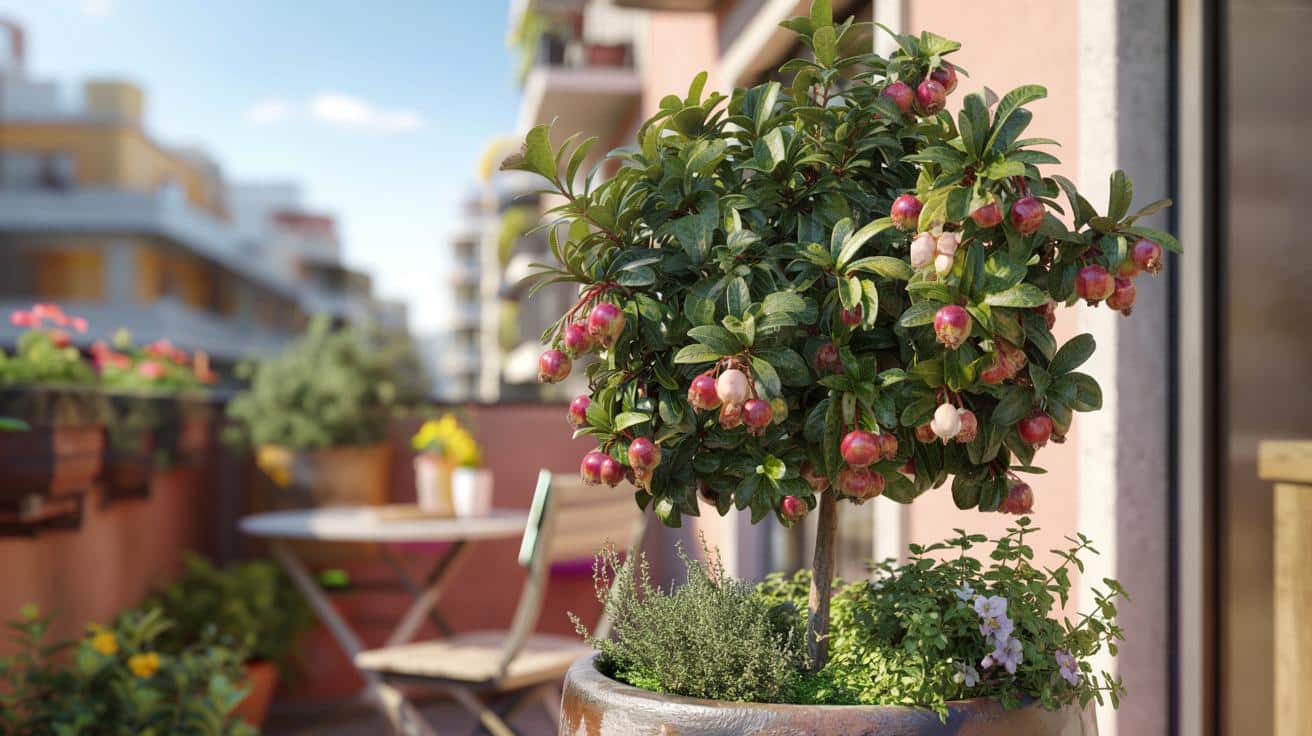
As gardeners start plotting their spring purchases, one compact fruit bush, long kept off mainstream radars, is suddenly getting attention. It promises exotic flavour, year-round greenery and a surprisingly easy life in a simple pot.
A tiny South American fruit tree made for pots
The plant at the centre of this quiet revolution is Ugni molinae, often called Chilean guava or murtilla. In its native Chile and southern Argentina, it grows as a low shrub on cool, damp hillsides. In a container on a balcony, it keeps that modest size, rarely pushing past 1.2–1.5 metres.
That compact habit changes the game for anyone gardening in a small space. You are not wrestling with sprawling branches or roots that try to colonise the whole terrace.
This is an “exotic” fruit tree that behaves like a tidy, evergreen patio shrub, not a demanding orchard prima donna.
Its dense, bushy shape also makes it interesting as a decorative plant first and a fruiter second. Many gardeners now use it to frame a doorway, soften a bare wall or add structure to a balcony rail, then enjoy the harvest as a bonus.
A perfume of strawberry and guava in a single berry
The real surprise comes when the berries ripen. They look like tiny, glossy red marbles, roughly blueberry-sized, hanging along the stems in autumn. Bite into one, and the flavour is oddly addictive: part wild strawberry, part guava, with hints of apple and a subtle spicy edge.
The taste has been described by enthusiasts as “strawberry jam with a twist, straight off the branch”.
For people used to supermarket fruit, that intensity can feel almost old-fashioned, closer to hedgerow picking than aisle shopping.
An evergreen that earns its space all year
Chile guava does not take the summers-only approach. It holds onto its small, dark green leaves through winter, giving a neat, polished look. The leaves are slightly leathery and glossy, which helps them cope with wind and air pollution on city balconies.
➡️ The hole in your pan handle isn’t just for hanging: here’s the clever use nobody talks about
➡️ The psychological reason understanding your reactions reduces mental tension
➡️ How light stretching during the day supports long-term mobility
In late spring, the shrub changes character again, covering itself with small, bell-shaped flowers in white to pale pink. They have a soft, sweet scent that draws bees and other pollinators, something urban spaces often lack.
- Winter: compact evergreen structure, foliage interest
- Spring: scented blossom, pollinator magnet
- Summer: steady growth, setting of fruit
- Autumn: harvest of red berries, extended picking season
Why this “exotic” shrub actually suits temperate climates
Hearing that a plant comes from South America can trigger alarm bells: tender, needy, best left to greenhouses. Chilean guava does not follow that script. It comes from cool, temperate forests, not tropical jungles, and copes surprisingly well with temperate winters.
In the ground, a well-rooted plant can handle short dips to around −10 °C. In a pot, roots feel the cold more, so some minimal precautions make sense.
A fleece wrapped around the pot or simply tucking it against a sheltered wall will usually be enough for most UK and mild US winters.
Wind is often more damaging than cold itself on exposed balconies. Placing the container where the plant gets light but is not blasted by icy gusts will keep foliage in better shape.
Getting the soil right: the only real non‑negotiable
The main sensitivity of Chilean guava sits beneath the surface: it hates lime. It belongs to the same broad group of acid-loving plants as blueberries and rhododendrons.
The ideal potting mix
For strong growth in a container, gardeners typically aim for:
- 60–70% ericaceous compost (acidic, low in lime)
- 20–30% well-rotted compost for nutrients
- Up to 10% horticultural sand or fine grit for drainage
A pot around 30–40 cm in diameter gives enough room for the roots to spread without waterlogging. Ensure there are drainage holes and avoid placing a saucer permanently full of water beneath.
| Factor | Preferred condition for Chilean guava |
|---|---|
| Soil pH | Acidic to slightly acidic (pH 5–6.5) |
| Light | Full sun in cool areas, light shade in hotter climates |
| Water | Evenly moist, never bone dry, not constantly soaked |
| Feeding | Light, regular feeding with fertiliser for acid-loving plants |
Watering and pruning for heavy crops
The root system of Chilean guava is fairly shallow. That brings two consequences: it reacts fast to dry compost, and it benefits hugely from mulching.
A simple routine in summer is to check the top centimetre of soil with a finger. If it feels dry, water thoroughly until liquid runs from the drainage holes, then let it drain completely.
A thick mulch of pine bark or cocoa shells keeps moisture in and gently supports the acidic soil the plant prefers.
Pruning does not need to be technical. At the end of winter, lightly snip out any dead or crossing branches and shorten any stem that spoils the compact shape.
This light annual trim encourages fresh side shoots, which in turn carry more flowers and fruit. Avoid heavy cutting into old wood, as that can slow growth for a season.
From October treats to kitchen experiments
One overlooked advantage of this shrub is timing. While most soft fruit finishes by late summer, Chilean guava often ripens from October into early winter, depending on climate and position.
That gives balcony gardeners something to pick when most containers look tired. The berries can be eaten straight off the plant, sprinkled on yoghurt or turned into quick sauces and jams.
A few simple uses that make the most of the flavour:
- Cook gently with a little sugar and lemon for a fast, fragrant compote.
- Freeze whole berries and add them to bakes in place of blueberries.
- Muddle fresh fruit into a gin and tonic or mocktail for a subtle, aromatic twist.
A quiet ally for urban biodiversity
Beyond the kitchen, Chilean guava supports a wider cast of visitors. The spring blossom draws bees at a time when many balconies are still sparse. Later, the dense foliage and berries can attract small birds, who may forage in the branches or beneath the pot.
Each fruiting shrub on a balcony acts as a tiny service station: nectar in spring, shelter in summer, fruit in autumn.
In a street of bare concrete and glass, a handful of such plants across several balconies begins to matter. They stitch together small stepping stones of habitat through the urban landscape.
What new growers should watch out for
For anyone tempted to try this plant for the first time, a few points deserve attention.
- Hard tap water: in regions with very hard water, limescale can gradually raise soil pH. Using collected rainwater when possible helps keep conditions right.
- Heatwaves: the shrub likes cool, moist conditions. In very hot spells on south-facing balconies, light shade cloth during the fiercest midday sun can prevent leaf scorch.
- Pot fatigue: every three to four years, refresh at least the top third of the compost and check roots. If they form a tight spiral, move up to a slightly larger pot.
Pests tend to be limited. Insects that bother other soft fruit rarely cause serious harm here, especially if the plant stays healthy and well watered. Occasional aphids can be washed off with a spray of water or treated with a mild soap solution.
Imagining a balcony built around a single shrub
One simple way to picture the role of Chilean guava is to imagine a typical city balcony: 2 metres by 1 metre, a table, two chairs, and little else. Place a single mature plant in a 40 cm pot near the railing, underplanted with trailing thyme and small violas.
Through winter, you look out at a permanent block of green, not a bank of dead stems. In spring, you crack the window and catch a light perfume from the blossoms. By late autumn, you step outside in a jumper, pick a handful of berries, and tip them onto your breakfast oats. That is the scale of change one shrub can bring.
For gardeners already growing blueberries or camellias in pots, Chilean guava slots in naturally. It shares similar soil preferences and appreciates the same mulches and feeds. Combining these species spreads flowering and fruiting across many months, stretching both visual interest and harvest into a much longer season.







