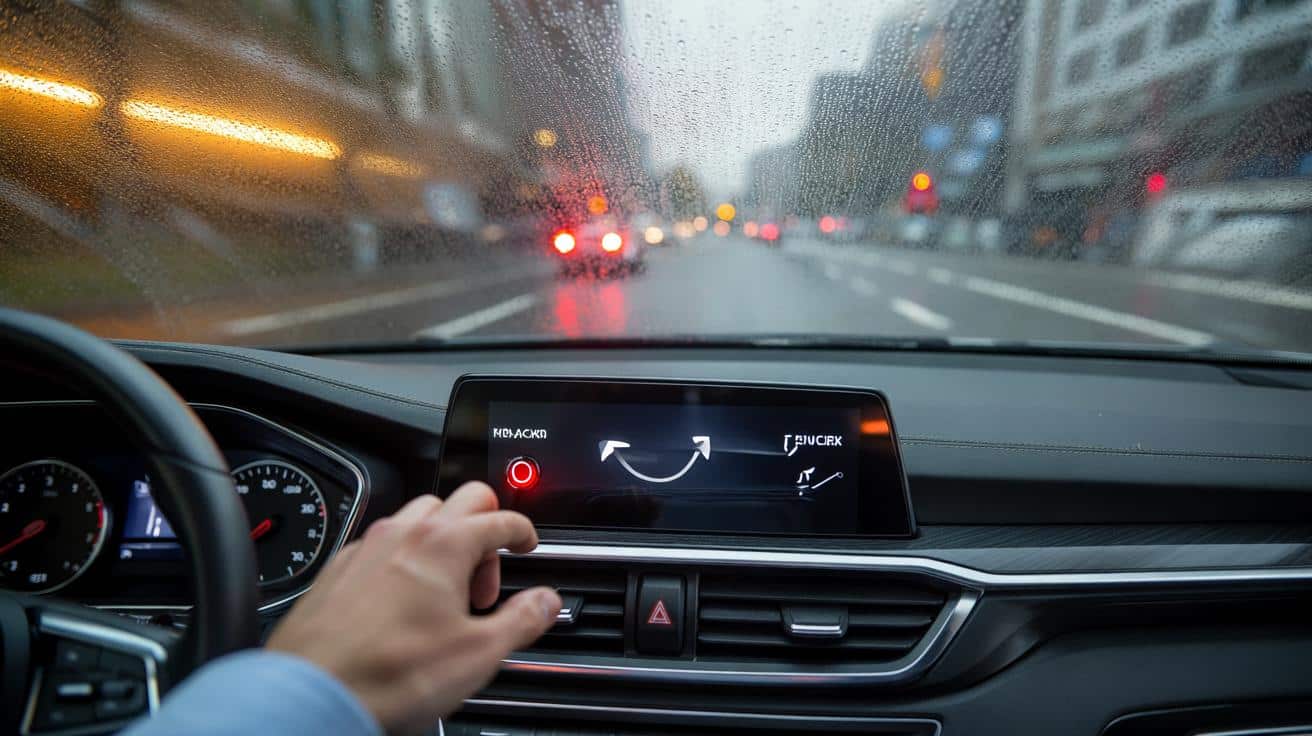
The traffic lights stay stubbornly red as a cold drizzle taps the windshield. Inside the car, the glass slowly turns milky, corners first, then right across your field of vision. You jab at the dashboard, hit the fan icon, twist a few knobs, maybe stab at the AC button, then that other one with the curved arrow you never fully understood. The engine revs. The fan howls. The fog? Barely moves.
Three minutes later, your windows are still cloudy, your fuel gauge has dipped a little, and your car smells like damp fabric and frustration.
And now car experts are saying: you’ve probably been using the worst possible setting all along.
Drivers are using the “wrong” fog setting — and paying for it
The drama starts with that innocent-looking recirculation button. You know, the one with a little arrow looping inside the outline of a car. Most drivers punch it on autopilot, especially when they want the car to warm up faster or blow hot air to chase the fog away. It feels logical. Keep the air inside, heat it up, win the battle.
Except specialists say this habit is quietly wrecking fuel economy, putting strain on your HVAC system, and making your windows fog up even worse. That tiny button might be doing more harm than your last speeding ticket.
Ask any mechanic or driving instructor and you’ll hear the same story. They’ll tell you about drivers who come in furious, swearing their defroster is broken because the windshield just won’t clear on rainy mornings. One London technician described a commuter who sat ten minutes in a parking spot with the engine idling, fan blasting on full, recirculation lit up bright…and the glass still cloudy.
When the mechanic reached over and switched off recirculation and turned on the AC, the fog vanished in less than 60 seconds. The driver’s jaw dropped. That whole time he’d been burning fuel and going nowhere, literally staring through a grey blur.
The logic is almost sneaky. Fog forms when warm, humid air inside the car hits cold glass. The moisture in the air condenses on the windshield and windows. So if you keep hitting recirculation, you’re trapping all that wet, warm breath and damp jacket air inside the cabin. You’re cooking your own mini sauna.
The AC system, even in winter, is designed to dry the air. When it’s paired with fresh outside air flowing in, it acts like a dehumidifier and clears the fog fast. With recirculation on, that moisture just goes round and round. *You’re basically asking your car to dry the same wet air over and over again.* No wonder experts call it a fuel-wasting loop.
The right way to clear fog — without roasting your fuel tank
So what’s the method that car experts wish every driver knew? It’s almost embarrassingly simple. First, turn the airflow to the windshield symbol or defrost mode. Next step: turn OFF the recirculation button so you’re bringing fresh air in from outside. Then, yes, hit the AC button, even if it’s cold out. Finally, add gentle warmth, not max heat blast, and bump the fan speed up a notch or two.
➡️ I followed the 50/30/20 rule for six months, here’s what really happened
➡️ Spain turns an engineering headache into a new turbine‑free source of hydropower for humanity
➡️ Goodbye Kitchen Islands : Their 2026 Replacement Is A More Practical And Elegant Trend
➡️ Hygiene after 65 : the bedtime hygiene ritual geriatric doctors strongly recommend
➡️ Why people who feel productive often stop checking one thing others obsess over
What happens next feels like a magic trick. The AC dries the incoming air, the heat slightly raises the glass temperature, and the dry air sweeps moisture off the windshield. The fog thins, first in streaks, then clean patches, until you can suddenly see the world again.
Plenty of drivers admit they’ve been doing the exact opposite for years. They crank everything to maximum: full heat, fan on high, recirculation locked in, all windows tightly shut. The cabin turns stuffy, the engine works harder, fuel burns faster, and the glass stays smeared with a hazy film.
We’ve all been there, that moment when you’re late for work, rubbing a sleeve across the windshield, convinced the car is “just old” or “bad in winter”. The truth stings a bit: the car was fine. The settings weren’t. And your fuel bill has quietly reflected that.
Some drivers feel personally attacked by this revelation. Social media is packed with comments under clips from mechanics and detailing pros explaining the “correct” fog strategy. One viral post by a Canadian driving coach racked up millions of views and hundreds of angry replies from people claiming carmakers “should have said this clearly years ago”.
“I’ve been driving for 20 years and no one told me this,” one driver wrote. “All that time sitting in car parks wasting fuel, scraping with my bank card, thinking my heater was broken. Why don’t dealers explain the AC-and-fresh-air combo when you buy the car?”
- Turn off recirculation when glass fogs up
- Switch airflow to windshield / defrost symbol
- Use AC to dry the air, even in winter
- Raise the temperature gently, not to maximum
- Crack a side window slightly if humidity is extreme
Fuel, frustration and a small button that changes everything
Once you see the pattern, it’s hard to unsee. That glowing recirculation icon you used for “comfort” on wet days was adding stress to your car’s systems, not easing it. The engine had to work to power the fan at full blast, keep the AC fighting wet, recycled air, and deal with all that trapped humidity seeping into fabrics and carpets.
Over time, that can mean stale smells, misty windows every morning, and even accelerated wear on components that never get a break. And yes, a little more money disappearing at the pump than you’d like to admit.
| Key point | Detail | Value for the reader |
|---|---|---|
| Use fresh air, not recirculation, to clear fog | Recirculation traps humid air and slows defogging | Faster visibility, safer driving, less frustration |
| AC helps even in winter | Air conditioning dries the air before it hits the glass | Quicker de-misting with less guesswork |
| Gentle heat + dry air beats full blast | Warming glass slightly while drying air reduces condensation | More comfort, less wasted fuel, smoother drive |
FAQ:
- Question 1Should I always turn on the AC to clear fog, even when it’s freezing outside?Yes. The AC doesn’t just cool; it dries the air. The system will still blow warm if you set a higher temperature, but the moisture level drops, so fog disappears quicker.
- Question 2When is it actually useful to use recirculation?Recirculation helps in heavy traffic with exhaust fumes, during intense heat waves to cool the cabin faster, or briefly in dusty conditions. Just don’t leave it on when your windows start to mist.
- Question 3Does using the AC really burn that much more fuel?Modern systems are more efficient than older ones. Yes, the compressor uses energy, but running it smartly for a short time to clear fog often uses less fuel than driving half blind with every setting on max for ten minutes.
- Question 4My rear window fogs up too. Is it the same process?The principle is similar, but most cars have an electric rear defogger: thin wires heat the glass directly. Use that button while also drying the cabin air with the front settings.
- Question 5Can a dirty cabin filter make fogging worse?Absolutely. A clogged pollen or cabin filter restricts airflow and sometimes holds moisture. Let’s be honest: nobody really does this every single day, but changing it on schedule can seriously help with fog and bad smells.