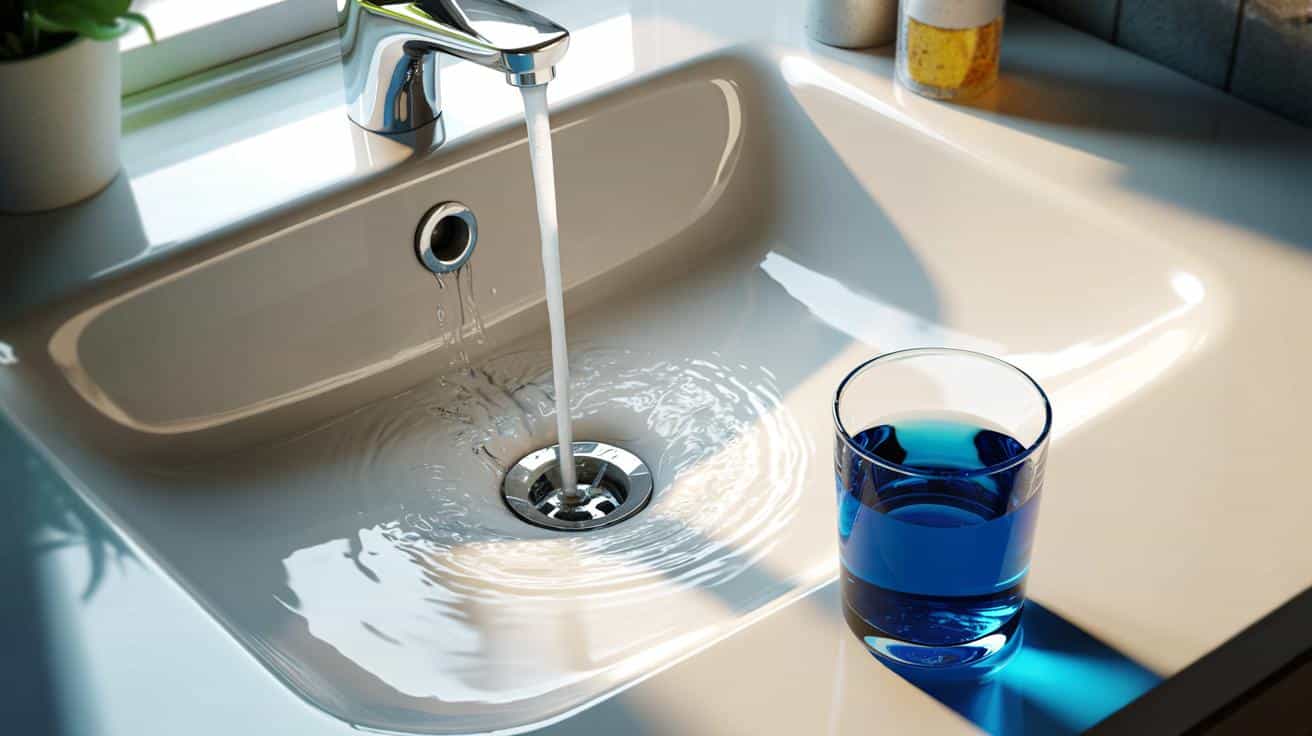
The first gurgle came while she was brushing her teeth. A lazy bubble of air from somewhere deep in the pipes, followed by that faint, sour smell you only notice when the window is closed. She paused, toothbrush in mid-air, and watched the water hesitate in the sink before swirling down in slow motion. Not blocked. Not yet. Just… sluggish.
She knew what came next. The late-night Google search. The ancient bottle of drain cleaner under the sink. The vinegar and baking soda volcano she’d tried ten times already. Each time, a small victory, then two weeks later, the same heavy water, the same smell.
That night, instead of reaching for the classic home chemistry set, she poured half a glass of something else.
The next morning, the drain almost… sighed.
No vinegar, no baking soda: the quiet war happening in your pipes
We rarely think about our drains until they start complaining. A gurgle here, a slow swirl there, that thin ring of grey around the sink that seems to appear overnight. It’s not dramatic, just slightly gross, a small domestic shame we try to ignore between two Zoom calls and a reheated lunch.
Then one day, the water no longer disappears on command. You’re standing ankle-deep in the shower, wondering how your hair managed to build a dam stronger than your willpower. The classic move is almost automatic: grab the white vinegar, the baking soda, and hope the home-science show will save the day again.
The truth is, the famous vinegar–baking soda combo works… until it doesn’t. It shines on light build-up, fresh grease, a bit of soap scum. Past a certain point, your pipes need more than a fizzy Instagram trick. That’s when people go nuclear and reach for the ultra-chemical gel that smells like it could clean a highway.
A plumber I met in a Paris apartment block told me he can guess a household’s habits as soon as he opens the trap. “Either I smell cheap perfume from fancy products, or I see the crust from years of DIY volcanoes,” he joked, half-serious. Between the two, there’s a quieter, less glamorous solution that rarely gets mentioned.
What really clogs a drain is rarely “one thing”. It’s layers. A film of grease from yesterday’s pasta water. Micro chunks of soap. Fine hair, lint, coffee grounds, a bit of toothpaste, maybe some shampoo with glitter because life is hard and you wanted nice hair.
Over time, those layers trap each other, like urban sediment. Vinegar attacks minerals. Baking soda deodorizes and reacts for a moment. Then the foam disappears, the show is over, and a good part of the gunk is still clinging to the pipe walls. **That’s where a different half-glass trick comes into play**. Not magic, just physics… and a bit of patience.
The half-glass move that quietly cleans your drain
The surprising hero in this story is not vinegar, not baking soda, not a fluorescent blue gel with a skull on the label. It’s plain, everyday *dishwashing liquid*, poured in a focused way. Half a glass of it.
➡️ France Moves To Lock In Europe’s Grip On A Battery Material That Could Decide The Future Of Cars
➡️ This is why saving small amounts feels pointless but isn’t
➡️ Puerto Rico suspends most flights and restricts airspace for US airlines amid escalating disruptions
Here’s how people who swear by this method do it. Late in the evening, when nobody will use the sink or shower for a couple of hours, they run very hot water for 10–20 seconds to gently warm the pipe. Then they stop the tap and slowly pour about half a glass of concentrated dishwashing liquid directly into the drain. No water right after. Just let it slide down the walls.
Dish soap is designed to break down grease on plates, pans, and plastic boxes you forgot in the fridge. That same power works in your pipes. Left to sit for 30 minutes to an hour, the liquid crawls along the internal surface like a quiet scout, softening the fatty film that traps hair and dirt. Later, they flush with a full kettle of very hot (not boiling for PVC) water, in one go.
People who use this trick don’t pretend it’s a miracle. They just say something simple: the drain feels lighter. The smell fades. The water doesn’t hesitate anymore. Let’s be honest: nobody really does this every single day. But once a month, or after a big cooking session with oily pans, it can change the story the pipes are trying to tell.
Some readers might be thinking, “I’ve poured dish soap in the sink before, and nothing happened.” The difference here is intention. The quantity. The timing. Pouring half a glass in a warm, resting pipe lets the product cling and work, instead of being instantly diluted by a waterfall of cold water.
A plumber summed it up to me over coffee:
“Most people attack their drains in panic mode. The best results come from small, boring rituals.”
To make it less boring, imagine your own tiny protocol:
- Pick one day a month: same evening, same sink, same quick routine.
- Use a quality, degreasing dish soap, not the ultra-diluted bargain version.
- Always finish with a big flush of very hot water to push softened residue away.
- Alternate this with a physical clean (small brush or hair catcher) every few months.
- If water is already standing for minutes, call a professional instead of insisting alone.
Between chemistry and habit: what your drains say about your life
Once you start paying attention, drains become a strange mirror of how you live. A family that cooks a lot of sauces and fries will fight fatty pipes. A bathroom filled with long hair and styling products will build a different kind of wall. A studio with a single student and their instant noodles has other issues, usually coffee grounds and detergent.
There’s a quiet wisdom in choosing a soft, regular gesture instead of waiting for a catastrophe. **Half a glass of dish soap once in a while will never be as spectacular as a foaming explosion on TikTok**, yet over a year, it might save you a Saturday waiting for a plumber, and a bill that stings. The story isn’t glamorous, but it’s strangely calming: instead of fighting your pipes, you cooperate with them.
Next time you hear that first gurgle, you might hesitate before lining up the vinegar and baking soda. You may remember that simple scene: a warm pipe, half a glass, a bit of time. And you’ll see what happens the next morning, when the water finally runs as if nothing had ever been wrong.
| Key point | Detail | Value for the reader |
|---|---|---|
| Use dishwashing liquid, not vinegar + baking soda | Pour about half a glass of concentrated dish soap into a warm, unused drain | Targets greasy build-up that traditional “volcano” tricks often leave behind |
| Let the product sit, then flush hot water | Wait 30–60 minutes, then send a full kettle of very hot water through | Helps detach softened residue and restore smoother water flow |
| Turn it into a simple monthly habit | Combine this with basic physical cleaning and hair catchers | Reduces odors, clogs, and emergency plumber visits over time |
FAQ:
- Question 1Can I use any dishwashing liquid for this trick?Prefer a concentrated, degreasing dish soap. Ultra-diluted or “gentle-only” versions have less power on the fatty film that lines pipes.
- Question 2Is this method safe for all types of pipes?For classic household plumbing (PVC or metal), yes, dish soap is mild. Use very hot, not boiling, water on PVC to avoid thermal shock.
- Question 3How often should I pour half a glass into my drain?Once a month is a good rhythm. Weekly is useful if you cook a lot of greasy food or have very long hair in the shower.
- Question 4What if the drain is already almost completely blocked?If water stands for minutes or doesn’t move at all, call a professional or use a mechanical tool. This half-glass tip is more for maintenance than crisis.
- Question 5Can I combine dish soap with vinegar or baking soda?You can, but there’s no real benefit in mixing everything. Use dish soap for grease, and keep vinegar for descaling taps or surfaces, not as a miracle inside pipes.