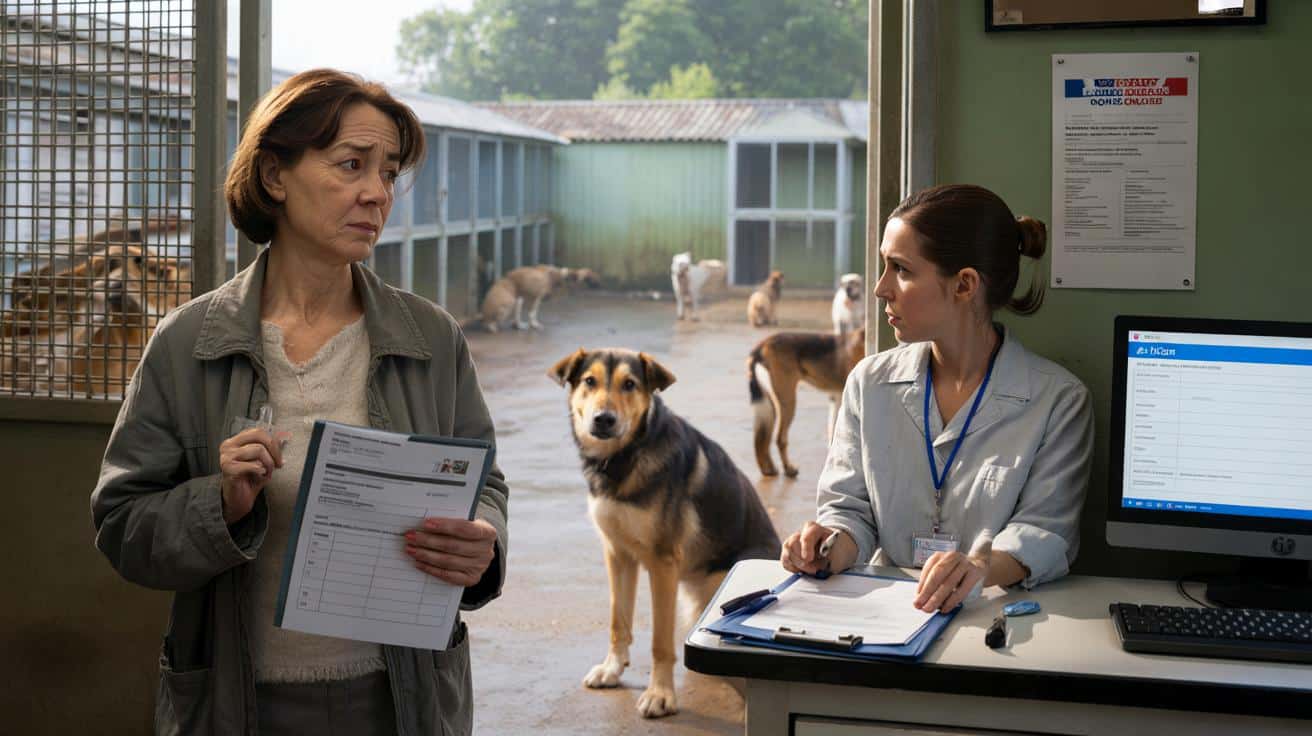
Regular adopters say they suddenly feel scrutinised, as if every walk to the shelter comes with a background check. A sweeping new French law has turned what used to be a quick, emotional decision into a tightly controlled administrative procedure designed to protect dogs from abuse, abandonment and illegal trade.
A New Year, a new layer of suspicion for adopters
On 11 January 2026, France quietly shifted how people welcome dogs into their homes. The emotional side of adoption is still there, but it now sits under a thick layer of bureaucracy. Long-time owners, who used to breeze through shelter doors, report a strange sensation: they feel treated less like volunteers doing a good deed and more like people under investigation.
The core idea is simple: no dog should leave a breeder or shelter without the state knowing exactly who is taking it and where it is going.
This change is framed as animal protection, not a crackdown on citizens. Yet the experience on the ground feels different. Forms, checks and centralised declarations can make even seasoned dog lovers feel as if they need to prove their innocence before they’re trusted with a leash.
The new pre-adoption identity check: no more “sign and go”
Until now, in many parts of France, adopting could be quick: a conversation, a basic questionnaire, a signature, and you walked out with a new companion. That era is over. The reform introduces a strict “prior identification” of the adopter before any dog can be handed over.
In practice, the breeder or shelter manager must submit a formal declaration as an operator to the authorities. Your details are no longer kept in a dusty local file; they are entered into a national system where they can be checked, traced and cross-referenced.
For future owners, that means:
- Providing full identity details (name, address, contact information).
- Signing new legal commitments linked to animal welfare.
- Accepting that the adoption is traceable by administrative services.
Some adopters describe the feeling bluntly: like having to prove you can use a screwdriver before you’re allowed to buy a shelf. The state wants evidence that you are real, reachable and capable. The intention is to filter out impulsive purchases, fake identities and people already flagged for animal neglect.
Goodbye pet shop windows: a quiet revolution on the high street
Another visible shift hits anyone walking through a French shopping centre. Those familiar windows of puppies and kittens, staring out under bright lights, have gone dark. The ban on dog sales in pet shops, adopted earlier, is now fully enforced and reinforced by the new controls.
➡️ 4 Evening Yoga Poses to Release Tight Hips and Reduce Lower-Body Tension
➡️ Investing in a parking space in 2026: 8% yield or resale nightmare?
➡️ Psychology explains why people who grew up being “the strong one” struggle to rest as adults
➡️ “I cleaned my home often but never felt it was fresh until this change”
➡️ “I’m 60+ and my recovery time doubled”: why rest now works differently
➡️ Most people misjudge how much time tasks take, this trick fixes that
➡️ Winter storm warning issued as officials caution against nonessential travel
The law shuts down “love at first sight” sales through glass, aiming to reduce impulse buys that too often end in abandonment.
From now on, anyone wanting a dog must turn to registered breeders or recognised associations and shelters. That requires a conscious decision and extra effort: no more grabbing a puppy between two other purchases.
Why France is pushing adoptions away from pet shops
The government’s logic is economic as much as emotional. Pet shops, in this model, are seen as purely commercial intermediaries with little control over breeding conditions. By forcing buyers towards declared breeders and non-profit organisations, authorities want:
| Objective | Expected effect |
|---|---|
| Limit impulse buying | Fewer “holiday dogs” abandoned once the novelty wears off |
| Strengthen traceability | Clear records from birth to adoption, easier controls |
| Support responsible breeders and shelters | Better welfare standards, more oversight of breeding conditions |
For adopters, the change adds friction. You have to schedule visits, talk through your lifestyle, answer questions, sometimes accept a waiting period or even a refusal.
The “microscope dog”: full tracing from birth to sofa
January 2026 marks the start of what French officials openly call a new era of reinforced traceability. Every stage of a dog’s life is now meant to leave a digital footprint.
From the first microchip or tattoo to the adoption papers, each transfer is supposed to be logged. Authorities want to be able to reconstruct the journey of a dog: the breeder, the litter, the conditions of sale, the identity of each successive owner.
The stated goal is to choke off the black market in puppies by making every legal path so visible that illegal ones stand out.
For genuine dog lovers, this is presented as good news. Adoption through the official channel signals that you have nothing to hide and that the animal is not the product of a clandestine breeding farm. The tension lies in the feeling: the state says it is hunting traffickers, but the person who feels the extra weight of forms is the ordinary adopter.
What shelters and breeders now have to do
The burden of the reform doesn’t fall only on families. Shelters and breeders must adapt their daily operations, often with very limited staff. Among their new or reinforced obligations:
- Register as official operators with the administration.
- Systematically record and declare each adoption or sale.
- Verify the adopter’s identity and, in some cases, housing conditions.
- Keep detailed records for potential inspections.
Some professionals welcome the clarity; others complain about a surge in paperwork that takes time away from caring for the animals. But failing to comply can mean fines, loss of licence or confiscation of animals.
Feeling judged before you’ve even picked a dog
A recurring theme among experienced owners is a new feeling of guilt, or at least suspicion. They walk into a shelter with a long history of responsible ownership, yet the process treats them like total unknowns.
Staff may ask about working hours, holidays, income stability and previous pets. On paper, it’s about matching each dog to the right environment. In reality, it can feel like a lifestyle audit.
Behind the questions stands a legal framework that assumes not everyone is fit to own a dog, and wants proof that you are.
Many adopters understand the social context: record numbers of abandonments, viral videos of backyard breeding operations, dogs sold online like used furniture. The law responds by raising the bar for everyone, including those who never contributed to the problem.
Practical scenarios: what changes for a future owner in France
For readers considering adoption in France, the journey in 2026 typically looks like this:
- Step 1 – Research: You contact a registered shelter or breeder; pet shops are no longer an option for buying dogs.
- Step 2 – Information gathering: You provide ID, address and sometimes supporting documents about housing.
- Step 3 – Interview: Staff ask about your experience, schedule, children in the home, other animals.
- Step 4 – Administrative declaration: The shelter or breeder files the official paperwork identifying you as the incoming owner.
- Step 5 – Handover: Only once everything is validated does the dog legally change hands.
Compared with 10 years ago, the process is slower and more formal, but it also gives you more information about the animal’s health, origins and behaviour. Many adopters leave with detailed vaccination histories, microchip numbers, and behaviour notes that used to be rare outside of high-end breeding circles.
Key terms behind the new French rules
For non-French readers following these changes from abroad, a few legal notions are worth unpacking:
- Operator declaration: A breeder, shelter or association officially informs the state that it breeds or places animals and accepts ongoing controls.
- Reinforced traceability: Every dog must be identifiable and each transfer documented in a national database, making anonymous sales harder.
- Interdiction of pet shop sales: Stores can still sell food, toys and accessories, but not dogs themselves.
Countries like the UK and several US states are watching these French experiments closely. Many face similar problems: online puppy mills, cross-border trafficking and shelters overwhelmed by returns after lockdown adoptions.
Risks, benefits and what this could mean for other countries
The French model carries both potential benefits and risks. On the positive side, a properly enforced traceability system can reveal networks of illegal breeders, expose serial offenders and make it harder for people banned from owning animals to reoffend under a new name.
There is also a cultural effect: when adopting a dog comes with a formal contract and a government-backed file, it signals that this is not a casual purchase. The animal is closer, legally and symbolically, to a family member than to a household object.
The risk is that some prospective owners might be discouraged by the administrative load and turn to informal channels: classified ads, unregistered backyard litters, or cross-border deals where no questions are asked. That would drive exactly the kind of opaque market the law is designed to fight.
For policymakers elsewhere, the French example raises practical questions: how far can a state go in monitoring pet ownership before citizens push back? How do you help shelters handle extra paperwork without draining their limited budgets? And how do you prevent responsible adopters from feeling like suspects while still catching those who treat dogs as disposable goods?
One thing is clear: in France in 2026, bringing a dog home still begins with affection, but it now passes first through a government file, a declaration, and a small test of patience for anyone ready to welcome four paws into their life.







